
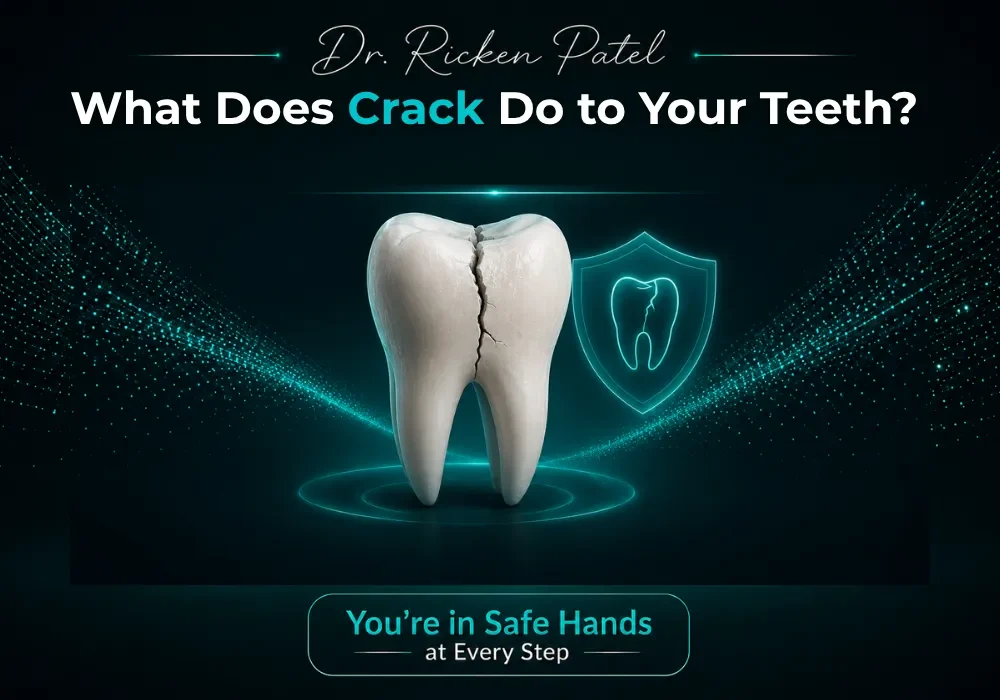
Cracked or damaged teeth can affect far more than your smile. Many people searching “what does crack do to your teeth” are actually trying to understand how tooth cracks, fractures, and structural damage impact oral health. Even a small crack in a tooth can weaken enamel, increase sensitivity, and eventually lead to serious dental complications if left untreated. In this article, we’ll explain what happens when a tooth cracks, the effects cracked teeth can have on your oral health, treatment options available to restore damaged teeth, and when it’s important to seek professional dental care.
What is a crack in a tooth?
A crack in a tooth means a line, split, or fracture in the enamel, dentine, or sometimes extending towards the pulp or root.
In a clinical dental context, a “crack” refers to a physical fracture in the tooth’s structure a condition officially known as Cracked Tooth Syndrome (CTS). These fractures can range from microscopic surface scratches in the enamel (craze lines) to severe vertical splits that extend deep into the tooth’s root.
What Does Crack Do to Your Teeth?
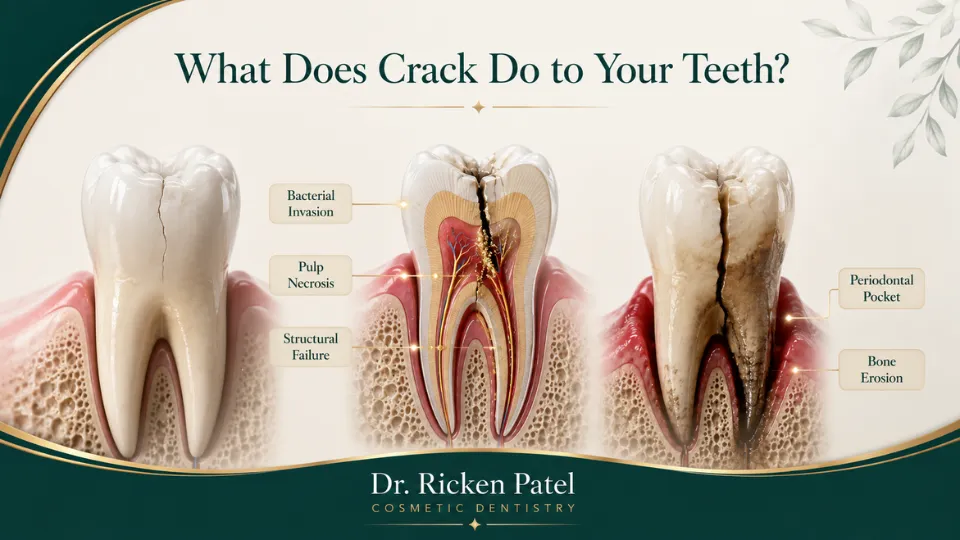
What does crack do to your teeth exactly? Because teeth cannot heal, chewing forces the fracture apart, pinching the nerve to cause sharp pain. It also breaks your enamel’s protective seal.
1-Effects of Crack on Your Teeth
Leaving a crack untreated initiates a dangerous domino effect on your tooth’s anatomy:
- Bacterial Invasion: The fracture creates a microscopic highway for oral bacteria to bypass your protective enamel and enter the porous dentin layer.
- Pulp Necrosis (Nerve Death): As bacteria seep in, the inner nerve becomes inflamed (pulpitis). If a cracked tooth develops a deep periodontal pocket of over 4 millimeters, there is a nearly 32% chance of pulp necrosis, meaning the tooth’s nerve permanently dies.
- Structural Failure: Without intervention, the repetitive forces of daily chewing will cause the fracture to propagate deeper, eventually resulting in a complete split that cannot be salvaged.
2-Effects of Crack on Your Gums
While we usually think of fractures as just an enamel problem, the effects of a crack on your gums can be equally devastating. If a vertical crack extends below the gumline, it triggers a dangerous chain reaction:
- The Structural Gap: The fracture creates an unnatural opening between the tooth root and the surrounding gum tissue.
- The “Periodontal Pocket”: This new gap becomes a deep trap for food particles and daily plaque.
- Unreachable Infection: Because a standard toothbrush cannot reach into this deep pocket, the trapped bacteria multiply. This causes localized gum inflammation, swelling, and bleeding.
- Bone Erosion: Over time, these trapped bacteria will erode the surrounding jawbone, ultimately resulting in localized periodontal disease.
Read More About: how to fix cracks in teeth?
Treatment Options for Crack Dental Damage
A cosmetic dentist will pair essential structural repairs with advanced cosmetic dental services so your tooth looks and feels completely natural. Depending on the severity of the crack, your treatment options include:
1- Dental Fillings & Cosmetic Bonding
For minor surface cracks or chipped edges that do not reach the inner nerve, your dentist can use composite resin bonding. This tooth-colored filling material is sculpted directly over the crack, sealing the enamel and instantly restoring the tooth’s natural appearance in a single visit.
2- Dental Crowns
This is the gold standard for treating a cracked tooth. When a crack is too large for a filling, but the tooth can still be saved, a custom porcelain crown is used. The crown acts as a protective “cap” that encases the entire visible portion of the tooth, physically binding the fractured pieces together so they can safely withstand the heavy forces of daily chewing.
For minor cosmetic fractures, a custom porcelain veneer is used to restore the tooth’s surface and aesthetic appearance.
3- Root Canal Treatment
If the crack has traveled deep enough to expose the sensitive inner pulp, bacteria will cause an infection. Before placing a crown, the dentist must perform a root canal to carefully remove the damaged nerve tissue, sanitize the inside of the root, and seal it. This saves the natural tooth structure while eliminating the pain.
4- Tooth Extraction
If a crack extends completely below the gumline or splits the tooth cleanly in half, the tooth can no longer be saved. In these severe cases, the tooth must be carefully extracted to prevent the infection from spreading into your jawbone and surrounding gums.
5- Dental Implants
If your cracked tooth requires extraction, a dental implant is the absolute best way to replace it. An implant replaces both the missing root and the visible tooth, preventing bone loss and restoring full chewing power.
A cosmetic dentist will make the final recommendation after reviewing your 3D CBCT scan.
- If your bone density is excellent, All-on-6 dental implants provide that extra peace of mind and durability.
- If your bone structure is more limited, All-on-4 dental implants are often the smarter, less invasive route to the same beautiful, functional result.
6- Full Mouth Reconstruction
In cases where widespread trauma, chronic teeth grinding (bruxism), or severe acid erosion has caused multiple cracked or broken teeth across your mouth, an isolated fix won’t be enough. A full mouth reconstruction is a comprehensive treatment plan that combines multiple therapies, such as crowns, implants, and bite realignment, to completely rebuild the health, function, and aesthetics of your entire smile.
When to See a Dentist?
Do not wait for the pain to become unbearable. You should schedule an appointment immediately if you experience:
- Sharp, fleeting pain when biting down on food.
- Suddenly, severe sensitivity to hot or cold beverages.
- Swelling in the gums around a specific tooth.
- A sensation that your bite feels “off” or uneven.
When seeking treatment, A cracked tooth requires more than just a repair; it requires an eye for beauty. By partnering with a cosmetic dentist who balances structural integrity with facial aesthetics, you ensure your smile remains both strong and stunning. Dr.Ricken uses advanced cosmetic dental services and high-grade materials to restore your teeth so seamlessly that no one will ever know they were damaged.
Restore Your Smile Today!
Dr. Ricken Patel provides personalized smile consultations to help you.
Trusted by 15,000+ Satisfied Patients
Conclusion
Understanding what does crack do to your teeth highlights the serious impact substance abuse can have on oral health. Cracks contribute to rapid tooth decay, enamel erosion, gum disease, cracked teeth, and even tooth loss. The combination of dry mouth, chemical exposure, poor oral hygiene, and teeth grinding creates a destructive cycle that can quickly damage the entire mouth.
FAQ About What Does Crack Do to Your Teeth
1. What happens if my tooth cracks?
When a tooth cracks, it loses its structural integrity. Depending on the depth of the crack, it can lead to sensitivity to hot and cold, pain when chewing, or even a deep bacterial infection within the tooth pulp.
2. Why does a cracked tooth cause pain?
The pain occurs because the crack exposes the inner layers of the tooth, specifically the dentin and, in some cases, the nerve. When you bite down, the movement of the fractured pieces irritates the nerve endings, causing that sharp, sudden pain.
3. Can a cracked tooth heal on its own?
Unlike skin or bone, teeth cannot self-repair. Once a tooth cracks, the damage is permanent, requiring professional intervention from a cosmetic dentist to prevent the fracture from spreading and to restore the tooth’s structural integrity.
4. Does a cracked tooth always need a crown?
Not always. For superficial cracks (like craze lines), simple polishing or a porcelain veneer might be sufficient.
5. How can I tell if my tooth is cracked?
Common signs include sharp pain when biting down or releasing pressure, lingering sensitivity to temperature, or localized swelling around the gum line.
6. Is a cracked tooth considered a dental emergency?
It depends on the severity. If you are experiencing intense pain, swelling, or have a significant portion of the tooth missing, seek immediate care; treating it as an emergency is often the only way to save the tooth.
7. How do you fix a crack that reaches the root?
If a crack extends into the root, it is often too severe for traditional repair. In such cases, extraction may be necessary, followed by advanced solutions like dental implants or an All-on-6 system to fully restore your arch’s function and aesthetics.