
A cracked tooth can feel confusing because it may look small on the outside but cause sharp pain, sensitivity, or pressure when you chew. Some cracks are only cosmetic, while others can reach deeper layers of the tooth and become more serious over time. If you are searching for how to fix cracks in teeth, the right answer depends on where the crack is, how deep it goes, and whether the tooth nerve is affected.
What Are Cracks in Teeth?
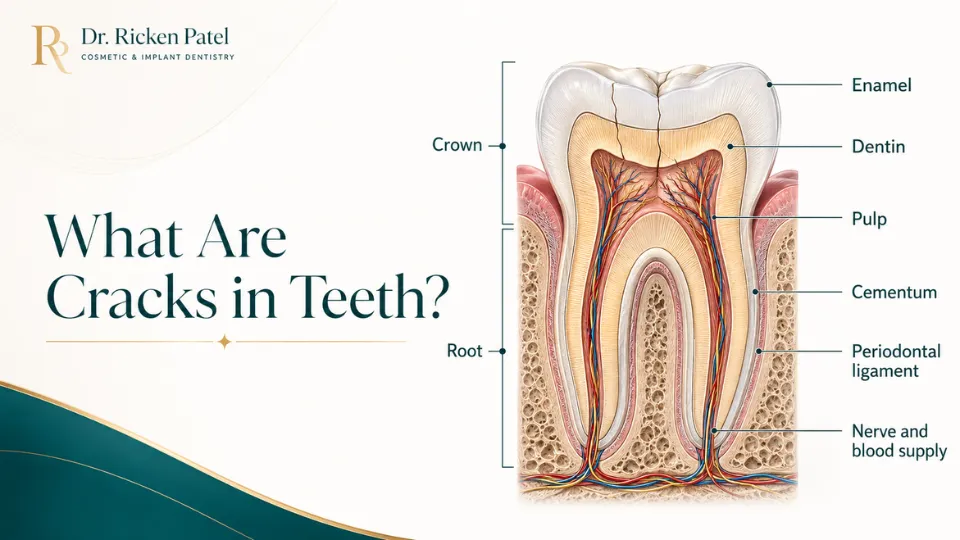
In simple terms, a cracked tooth is a partial or complete break in the hard outer shell of your tooth (the enamel) that extends inward. Depending on the severity, this crack can reach the sensitive nerve center (the pulp) or travel all the way down to the root.
The 5 Types of Tooth Cracks
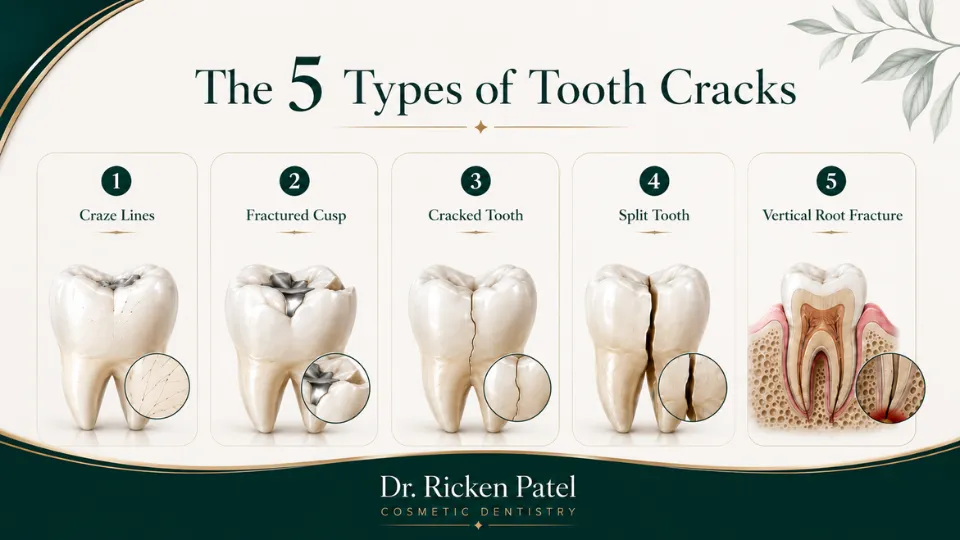
Not all tooth cracks are the same. The type of crack usually determines how the tooth can be treated.
1- Craze lines
Craze lines are very small cracks in the outer enamel. They are usually shallow and often appear as fine lines on front teeth. They are mostly cosmetic and may not need treatment unless they affect appearance.
2- Fractured cusp
A fractured cusp happens when part of the chewing surface breaks, often around an old filling. This may cause discomfort when biting, but the tooth can often be restored if the crack has not reached too deep.
3- Cracked tooth
A cracked tooth usually means the crack starts on the chewing surface and moves downward. This type can be harder to diagnose because pain may come and go. Early treatment is important to prevent the crack from spreading.
4- Split tooth
A split tooth means the crack has extended far enough to separate parts of the tooth. In some cases, part of the tooth may be saved, but severe splits may require removal.
5- Vertical root fracture
A vertical root fracture starts in the root and moves upward. It may not cause symptoms at first, but it can lead to gum infection, swelling, or deep pockets around the tooth.
Signs and Symptoms of Cracked Teeth
A cracked tooth may not hurt all the time. Pain often occurs when chewing or when exposed to hot, cold, or sweet foods.
Common signs:
- Sharp pain when biting down
- Pain when releasing your bite
- Sensitivity to cold, heat, or sweetness
- Swelling around the gum
- A rough or sharp edge on the tooth
- Pain that comes and goes
- Discomfort that is hard to locate
- A visible line or chip in the tooth
A crack may not always show clearly on an X-ray, especially in the early stages. Dentists may need to use a bite test, magnification, lighting, or other diagnostic tools to find the problem.
What Should I Do If I Cracked a Tooth?
If you think you cracked a tooth, do not keep chewing on it to “test” the pain. That can make the crack worse.
Start with these steps:
- Rinse your mouth gently with warm water.
- Avoid chewing on the cracked side.
- Use a cold compress if there is swelling.
- Cover a sharp edge with dental wax if it is cutting your tongue or cheek.
- Save any broken pieces of the tooth if they come off.
- Call a dentist as soon as possible.
If you have severe pain, swelling, bleeding, fever, or a tooth that feels loose, treat it as urgent. A cracked tooth can sometimes expose the inner nerve or allow bacteria to reach deeper tissue.
How to Fix Cracks in Teeth?
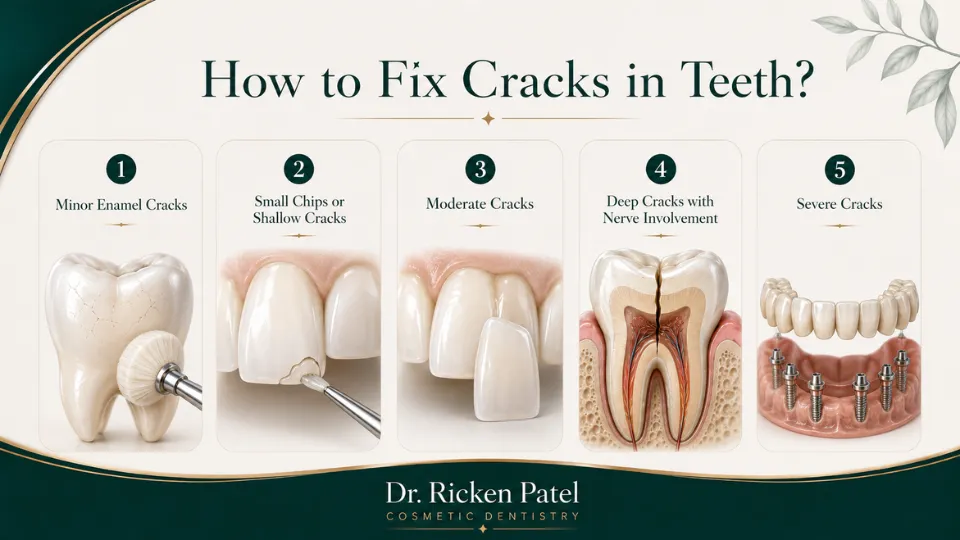
A cosmetic dentist can determine how to fix cracks in teeth based on their depth, location, and whether they have reached the enamel, dentin, pulp, or root.
1- Minor enamel cracks
Small surface cracks may only need polishing, smoothing, bonding, or cosmetic treatment if they affect the smile.
2- Small chips or shallow cracks
Dental bonding may repair a small visible crack or chip. A tooth-colored resin is shaped and bonded to the tooth. This is often useful for minor front-tooth damage, but it may not be strong enough for deeper cracks or heavy bite pressure.
3- Moderate cracks
Moderate cracks on visible front teeth may be best treated with porcelain veneers if the tooth is still strong and the crack has not reached the nerve or root. A porcelain veneer covers the front surface of the tooth, improves its shape and color, and creates a stronger, natural-looking smile.
4- Deep cracks with nerve involvement
When a crack reaches the pulp, the tooth needs more than a simple cosmetic repair. Full mouth reconstruction is often the best option when deep cracks are associated with severe tooth damage, bite pressure, worn teeth, or failing dental work.
4- Severe cracks
Severe cracks may need All-on-4 or All-on-6 dental implants when several teeth are too damaged to save, or the full arch is failing. Instead of repairing weak teeth one by one, these treatments replace unstable teeth with a fixed, natural-looking smile supported by dental implants.
Read More About: How to Fix the Shape of Your Teeth
How to Prevent Tooth Cracks
You cannot prevent every accident, but you can reduce the risk of tooth cracks by protecting your teeth from avoidable stress.
- Avoid chewing ice, hard candy, pens, popcorn kernels, or hard objects.
- Wear a nightguard if you grind or clench your teeth.
- Use a sports mouthguard for contact sports.
- Replace large failing fillings before the tooth weakens further.
- Treat cavities early before the tooth structure breaks down.
- Do not use your teeth to open packages.
- Keep regular dental exams so small cracks can be found early.
Restoring the Strength and Appearance of Your Teeth
A cracked tooth shouldn’t hold your smile hostage. Dr. Ricken Patel, a Rutgers-trained cosmetic dentist in New Jersey known as the “Smile Architect,” goes beyond simple fixes to completely rebuild your confidence.
Here is how he seamlessly restores your smile:
- Advanced Cosmetic Dental Services: Utilizing porcelain veneers, innovative 3D printed veneers, and full mouth reconstruction to restore your tooth’s strength and beauty.
- See Your Future Smile: Featuring cutting-edge AI smile simulation and digital smile design so you can visualize your flawless results before treatment even begins.
- Natural, Never Overdone: A highly personalized approach focused on perfect facial harmony, ensuring your restoration blends seamlessly with your natural teeth.
- Trusted Expertise: Backed by 15+ years of clinical precision, 15,000+ satisfied patients, and hundreds of verified 5-star reviews.
Protect Your Smile Before the Crack Gets Worse
Dr. Ricken Patel evaluates cracked teeth and recommends the right cosmetic dental treatment to restore comfort, strength, and a natural-looking smile.
Trusted by 15,000+ Satisfied Patients
Conclusion
Finally, A cracked tooth will never heal on its own, and ignoring the pain usually turns a small fracture into a much bigger emergency. Figuring out how to Fix Cracks in Teeth as early as possible is the best way to save your natural tooth and prevent the damage from spreading deeper. By taking action now, you can stop the sudden pain, restore your bite, and get back to eating and living comfortably.
FAQ About How to Fix Cracks in Teeth
1. Can Cracked Teeth Heal?
No, true cracked teeth do not heal like bone or skin.
2. How are Cracked Teeth Fixed?
Cracked teeth may be fixed with bonding, veneers, crowns, root canal treatment, or extraction and replacement in severe cases.
3. Is a Cracked Tooth Always Painful?
No. Some cracks cause no pain at first.
4. Can Porcelain Veneers Fix Cracked Teeth?
Porcelain veneers can help with small visible cracks, chips, or worn front teeth when the tooth is still healthy.
5. What Happens If I Ignore a Cracked Tooth?
The crack can spread, sensitivity may increase, and bacteria may reach deeper parts of the tooth. In some cases, the tooth may need a root canal or extraction if treatment is delayed too long.
6. When Should I See a Dentist For a Cracked Tooth?
You should see a dentist as soon as possible if you feel pain when chewing, cold sensitivity, swelling, a sharp edge, or a visible crack. Severe pain, bleeding, swelling, or a loose tooth should be treated urgently.