

When considering a smile transformation, permanent veneers price is often the primary concern for many patients. The cosmetic dentistry sector is experiencing remarkable growth, with the global veneer market projected to reach $2.47 billion in 2024 and continue expanding steadily. Approximately 600,000 Americans invest in veneers each year, recognizing them as durable solutions that offer both aesthetic enhancement and functional dental restoration far from mere temporary cosmetic fixes.
What Are Permanent Veneers?
Permanent veneers are ultra-thin shells typically measuring 0.5 millimeters thick, crafted from dental-grade materials and bonded to the front surface of natural teeth. Unlike temporary or removable cosmetic solutions, permanent veneers represent an irreversible commitment because the process requires removing a small amount of tooth enamel (approximately 0.5 mm) to ensure proper fit and natural appearance.
Read More About: Most Natural Looking Veneers.
Types of Permanent Veneers
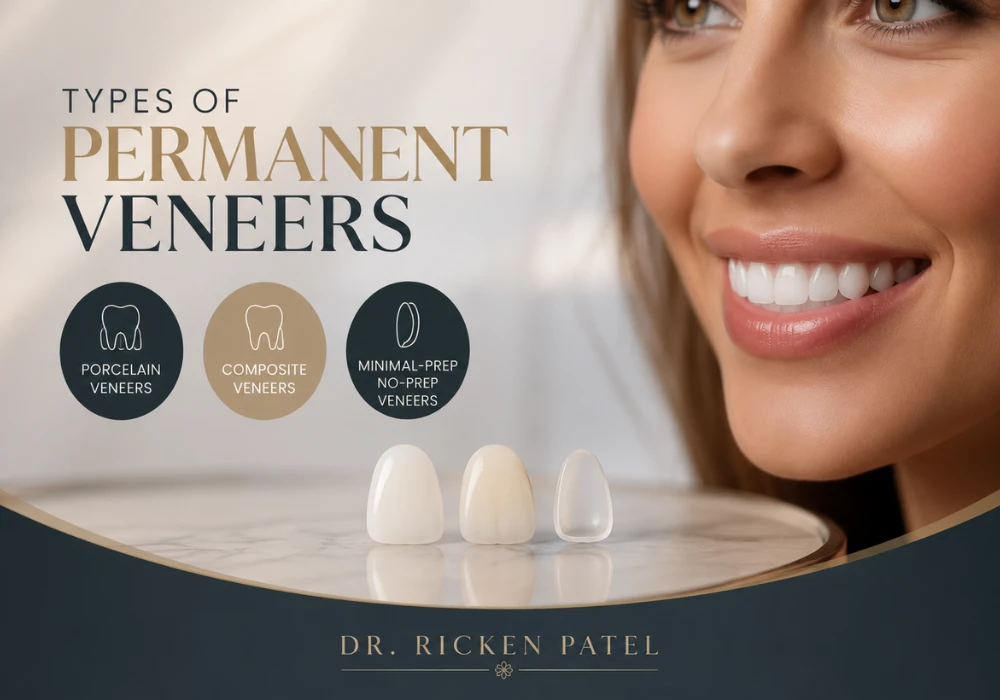
The primary distinction in permanent veneer classification involves material composition, as this fundamentally affects permanence, appearance, longevity, and, naturally, cost.
1. Porcelain (Ceramic) Veneers
Price Range of porcelain veneers: $900–$2,500 per tooth
Longevity:
- 10-year survival rate: 95%–95.5% according to systematic reviews analyzing 6,500+ clinical cases
- 15-year survival rate: 85%–90%
- Mean lifespan: 10–15 years, with many patients experiencing 20+ year longevity with proper maintenance
Advantages:
- Superior stain resistance compared to natural tooth enamel
- Mimics natural tooth translucency and light reflection
- Exceptional durability and wear resistance
- Biocompatible with gum tissue
- Maintains color stability over decades
Disadvantages:
- Highest initial cost
- Requires removal of more tooth structure than composite alternatives
- Requires specialist laboratory fabrication
- Cannot be easily adjusted after placement
2. Composite Resin Veneers
Price Range: $250–$1,500 per tooth
Longevity:
- 5-year survival rate: 95%
- 7-year survival rate: approximately 70%–80%
- Mean lifespan: 5–7 years (shorter than porcelain alternatives)
Advantages:
- Significantly lower initial cost
- Minimal or no tooth preparation required for some systems
- Repairable if damaged
- Completed in one or two appointments
- Reversible in certain cases, particularly minimal-prep composite options
Disadvantages:
- More prone to staining and discoloration over time
- Requires more frequent replacement
- Less durable than porcelain materials
- More maintenance and care are required
- May appear less natural due to reduced translucency
3. Minimal-Prep and No-Prep Veneers (Lumineers)
Price Range: $800–$2,000 per tooth (premium ultra-thin option)
Longevity:
According to the National Library of Medicine, a retrospective clinical evaluation of no-prep veneers using the CH no-prep protocol reported a 97.4% survival rate after 30–60 months, demonstrating that conservative approaches can deliver excellent outcomes when executed by experienced practitioners.
The Materials of Permanent Veneers
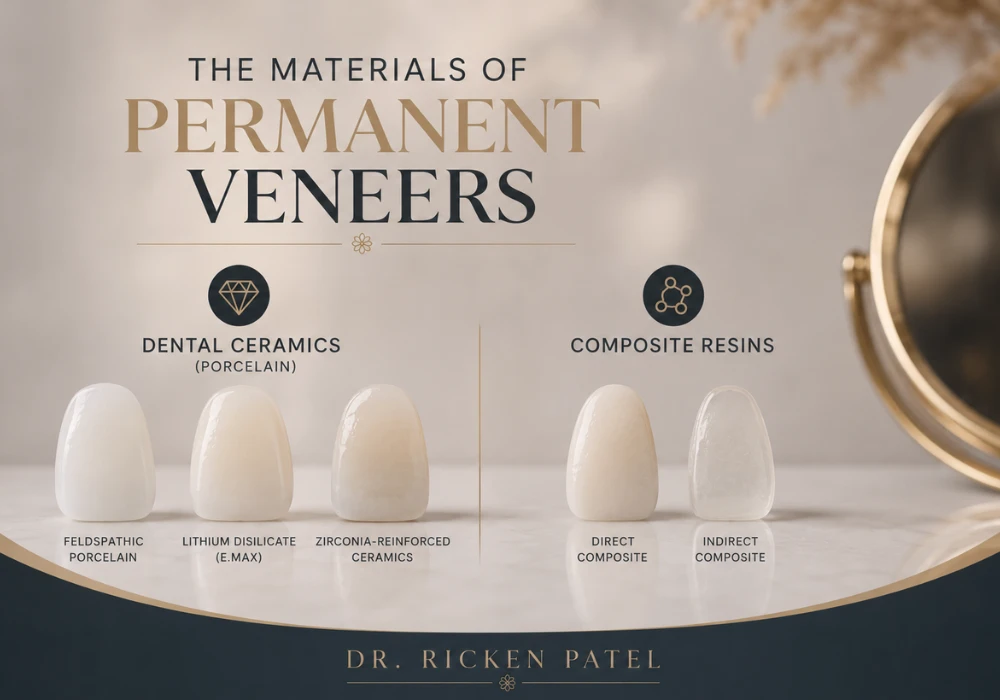
When choosing a permanent veneer, the material selected directly affects the restoration’s appearance, thickness, durability, and cost. Cosmetic dentists relies on two primary material categories:
1-Dental Ceramics (Porcelain)
Feldspathic Porcelain: Traditional ceramic material offering excellent aesthetics but slightly lower durability. 10-year survival: approximately 91%.
Lithium Disilicate (e.max): Advanced ceramic engineered with superior strength properties. 10-year survival rate: 94–97%, representing the current gold standard in veneer materials.
Zirconia-Reinforced Ceramics: The highest strength materials used for severe wear cases. Excellent longevity, but may compromise aesthetic translucency compared to feldspathic options.
2. Composite Resins:
Direct Composite: Sculpted, shaped, and cured directly on the tooth surface by the dentist in a single clinical appointment. Modern nano-hybrid composites offer improved polishability, though they remain vulnerable to localized wear over time.
Indirect Composite: Processed outside the mouth, either in a dental laboratory or milled via a CAD/CAM machine. Because they are cured under intense heat and pressure, they exhibit higher density and better mechanical stability than direct composites; they still lack the complete stain resistance inherent to glass ceramics.
Factors That Affect Permanent Veneers Price
A permanent veneers price quote reveals little without understanding the complete cost-determining ecosystem. Multiple interconnected variables influence final pricing, and savvy patients should evaluate each factor when comparing quotes.
- Material Type: The Primary Cost Driver
- Dentist Experience and Credentials
- Geographic Location and Market Dynamics
- Number of Teeth Requiring Treatment
- Case Complexity and Preparation Requirements
- Laboratory Fees and Equipment Costs
- Tooth Preparation and Temporary Restorations
How Much DO Permanent Veneers Cost?
Permanent veneers cost between $250 and $2,500 per tooth, depending heavily on the material:
- Composite Resin: $250–$1,500 per tooth (lower upfront cost, shorter lifespan).
- Porcelain / Ceramic: $900–$2,500 per tooth
Total pricing varies based on the number of teeth treated, lab artistry, and your dentist’s location. Because this is an elective cosmetic procedure, it is rarely covered by dental insurance.
Financing Options for Permanent Veneers
The high upfront cost of permanent veneers shouldn’t deter patients from pursuing a smile transformation. Flexible financing options make cosmetic dental treatments accessible to patients with a wide range of budgets.
1. CareCredit Healthcare Credit Card
2. In-House Dental Financing Plans
3. Personal Dental Loans
4. Dental Discount Plans and Membership Programs
5. Direct Payment with Discounts
6. Combination Financing Strategy
Choosing the Right Permanent Veneers
At Smiles Family Dental, we know that cosmetic dentist services like getting veneers aren’t just about changing your teeth; it’s about getting your life and confidence back
Here is how we help you choose the right option for your smile:
1-Custom Facial Harmony:
We don’t do “one-size-fits-all.” We design the shape, length, and shade of your veneers to match your lip symmetry and natural facial features perfectly
2-Material Matched to Your Life:
We select the exact right material for your daily habits, from ultra-strong zirconia if you grind your teeth, to highly translucent porcelain for the most natural, lifelike shine.
Dr. Ricken Patel knows exactly what it feels like to sit in your chair. After losing his front teeth in an 8th-grade gym class accident, he spent years self-conscious about his smile until a dentist gave it back to him. He brings that same empathy, precision, and care to every single veneer case he takes on
Get Your Confidence Back and Schedule Your Smile Consultation Today
Conclusion
While the permanent veneers price in 2026 typically ranges from $500 to $2,895 per tooth with a national average of $1,765, this cost represents a lasting investment in both your confidence and oral health and This cost reflects the high-grade materials, precision artistry, and specialized clinical expertise required to give you a flawless, functional smile that lasts for years.
FAQ About Permanent Veneers Price
1. How long do porcelain veneers typically last, and when will I need replacements?
Porcelain veneers typically last 10 to 15 years, and with excellent oral hygiene and regular dental checkups, they can often last up to 20 years. You may need replacements if you notice visible wear, gum recession, or separation around the veneers.
2. What’s the cost difference between porcelain and composite veneers long-term?
Composite veneers generally cost between $250 and $1,500 per tooth and typically last 5 to 7 years. Porcelain veneers usually cost between $900 and $2,500 per tooth but can last 10 to 20 years, making them a more durable long-term investment.
3. Do veneers require special maintenance or care?
No. Veneers do not require special maintenance. Simply brush and floss regularly, protect your teeth from excessive force, and wear a nightguard if you grind your teeth while sleeping.
4. What happens if a veneer fractures or becomes damaged?
If a veneer fractures, cracks, or becomes damaged, it usually cannot be repaired and will need to be replaced by your dentist.
5. Is it possible to reverse veneers if I want to?
No. Permanent veneers are considered irreversible because a small amount of natural enamel is removed during the preparation process.