
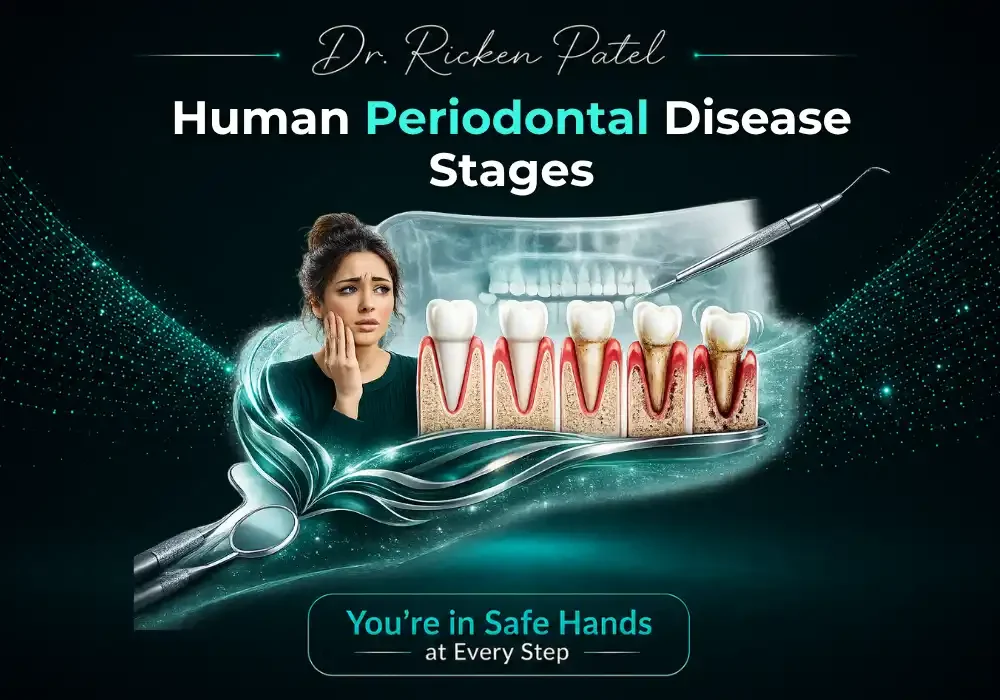
Gum disease sneaks up on you, moving through the human periodontal disease stages from simple inflammation to severe bone and tooth loss. It’s incredibly common, affecting nearly 42% of adults over 30. Understanding what causes it, how dentists diagnose it, and the necessary treatments is crucial for your health.
What Is Human Periodontal Disease?
Human periodontal disease is a sneaky infection that attacks the foundation holding your teeth in place, your gums, ligaments, and bone. It often begins as gingivitis, causing red, swollen, or bleeding gums. However, if it’s left unchecked, it advances into periodontitis, sneaking below the gumline to actively destroy your jawbone. This can ultimately lead to painful chewing, loose teeth, and even tooth loss.
Causes And Risks For Periodontal Disease
Gum disease starts with plaque, a sticky film of bacteria that constantly builds up on your teeth. If it is left unbrushed, it hardens into tartar, which only a dental professional can remove. Once it gets under your gumline, it constantly irritates your tissues and fuels the infection.
Common causes and risk factors:
- Poor brushing and flossing habits.
- Tartar buildup.
- Smoking.
- Diabetes.
- Genetics,.
- Dry mouth or certain medications.
- Crooked teeth, clenching, or grinding.
- Hormonal changes.
- Poor nutrition and chronic inflammation.
How Dentists Diagnose Periodontal Disease
Catching gum disease isn’t guesswork. Dentists use a few routine, painless checks to look beneath the surface and figure out exactly how healthy your gums and bone really are.
- Medical History Review: Your dentist will evaluate key risk factors such as tobacco use, specific medications, or systemic conditions like diabetes, that increase your susceptibility to gum infections.
- A visual exam: They will look closely for swelling, redness, receding gums, and any obvious signs of plaque or tartar buildup.
Measuring gum pockets: Using a tiny, specialized ruler called a periodontal probe, your dentist gently measures the space between your teeth and gums. Healthy pockets are 1 to 3 millimeters deep; anything deeper means the gums are pulling away. - Taking digital X-rays: Since bone loss happens out of sight, dental X-rays are crucial. They show the dentist exactly how strong your jawbone is and if the infection has started damaging your tooth support system.
Human Periodontal Disease Stages
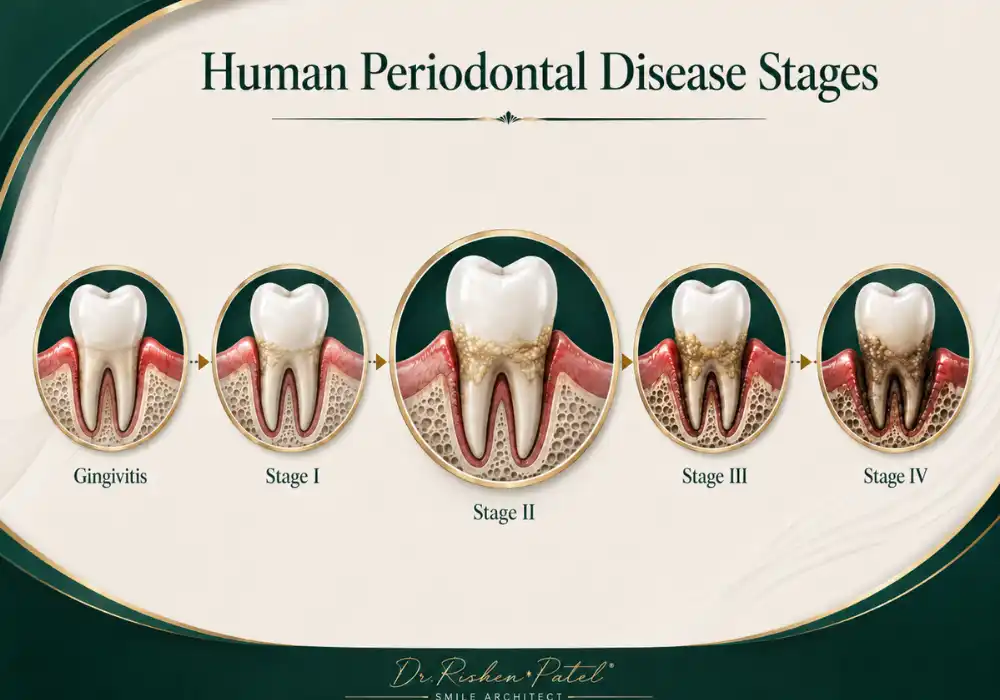
Human periodontal disease stages help dentists understand how far gum disease has progressed and how much support the teeth have lost. The current classification divides periodontitis into Stages I, II, III, and IV, based on the severity of damage and the complexity of treatment required.
Gingivitis
Gingivitis is not yet full periodontitis, but it is the warning stage. The gums may bleed, look swollen, or feel tender. At this stage, bone loss has not usually occurred. With proper cleaning, better home care, and regular dental visits, gingivitis can often be reversed.
Stage I: initial periodontitis
Stage I is early periodontitis. There may be mild bone loss and early gum pocket changes. Symptoms may be mild, so many patients do not notice a serious problem. Treatment at this stage focuses on stopping the infection before more support is lost.
Stage II: moderate periodontitis
Periodontitis stage 2 means the disease has moved beyond the earliest level. Gum pockets may be deeper, bone loss may be more visible on X-rays, and the gums may bleed more easily. Some patients may notice bad breath, gum recession, or sensitivity.
At this stage, professional treatment is important because the disease is usually not reversible at home.
Stage III: severe periodontitis
Stage 3 periodontal disease means the infection has caused more serious damage to the bone and tissues that support the teeth. At this stage, patients may notice deeper gum pockets, gum recession, loose teeth, infection around the tooth roots, or difficulty chewing.
Periodontal disease stage 3 is a major warning sign because tooth loss may become possible without treatment. However, many teeth may still be saved with the right periodontal therapy, maintenance, and restorative planning.
Stage IV: advanced periodontitis
Stage IV is the most advanced stage. At this level, patients may have several loose teeth, difficulty chewing, teeth that have shifted out of position, changes in the way the upper and lower teeth fit together, or significant tooth loss. Treatment is more complex and may involve periodontal therapy, tooth replacement, bite correction, and full-mouth reconstruction planning.
Treatment Options For Periodontal Disease By Stage
Treatment depends on the stage, severity, and health of the gums, bone, and teeth.
- Gingivitis: professional cleaning, improved brushing, flossing, and routine dental visits.
- Stage I periodontitis: deep cleaning, plaque and tartar removal, home-care improvement, and periodontal monitoring.
- Periodontitis stage 2: scaling and root planing, deeper cleaning below the gumline, possible antimicrobial treatment, and more frequent maintenance visits.
- Stage 3 periodontal disease: advanced periodontal therapy, possible gum or bone procedures, bite evaluation, and treatment to stabilize teeth.
- Stage IV periodontitis: complex care that may include periodontal treatment, extraction of hopeless teeth, dental implants, full mouth reconstruction, or fixed full-arch options.
A stunning smile is built on a healthy foundation. A cosmetic dentist goes far beyond surface aesthetics, which is why prioritizing your gum health always comes first. At Dr. Ricken Patel’s practice, our comprehensive treatment planning integrates advanced digital smile simulation design with a commitment to natural-looking results and long-term function.
In advanced cases of periodontal disease, tooth loss can eventually occur, making it important to understand what are options for missing teeth.
How To Prevent Periodontal Disease?
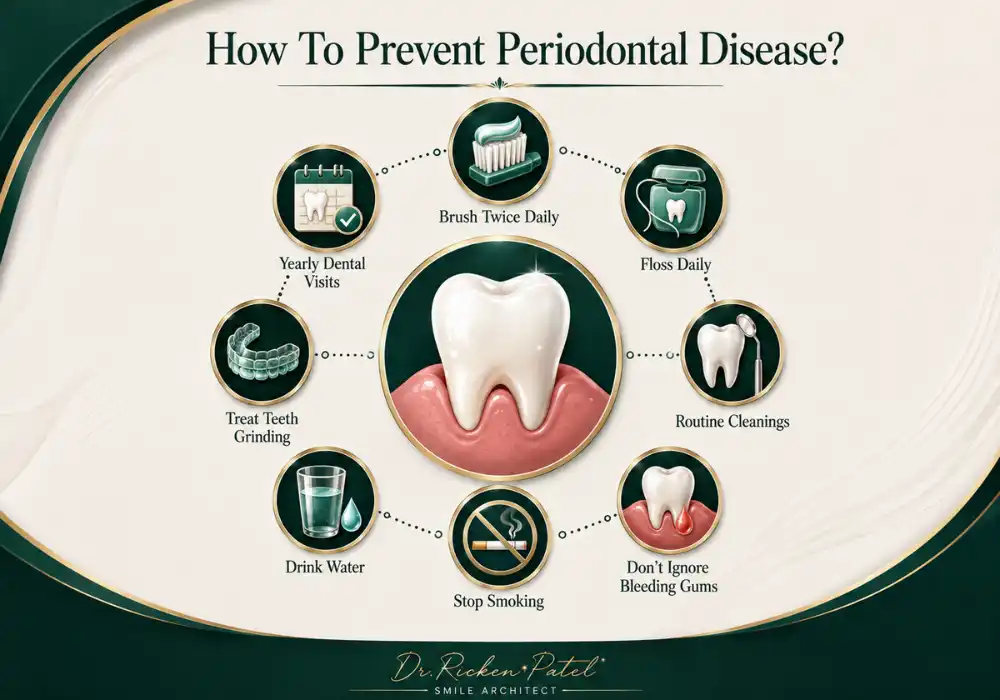
- Brush twice daily.
- Floss or clean between teeth daily to remove plaque.
- Schedule routine dental cleanings to remove tartar.
- Do not ignore bleeding gums, even if there is no pain.
- Stop smoking.
- Drink water and manage dry mouth.
- Treat teeth grinding or bite problems.
- Visit the dentist at least yearly.
Conclusion
Because human periodontal disease stages advance over time, early detection is vital to prevent permanent bone and tissue loss. If you notice warning signs like bleeding gums, persistent bad breath, or teeth that feel slightly loose, scheduling a prompt dental evaluation is key. Catching the infection early allows your dentist to step in with a targeted care plan before any lasting damage occurs. With professional guidance and a proactive routine, you can easily halt the disease’s progress, protect your natural teeth, and keep your smile healthy and confident.
FAQ About Human Periodontal Disease Stages
1. What are the main stages of human periodontal disease?
The main stages include gingivitis, Stage I periodontitis, Stage II periodontitis, Stage III periodontitis, and Stage IV periodontitis.
2. Is gingivitis the same as periodontitis?
No. Gingivitis affects the gums and is often reversible.
3. What does periodontitis stage 2 mean?
Periodontitis stage 2 means moderate gum disease. There may be deeper gum pockets, bleeding, gum recession, and visible bone loss on X-rays. Professional treatment is needed to stop progression.
4. Is stage 3 periodontal disease serious?
Yes. Stage 3 periodontal disease is serious because there is advanced tissue and bone damage. Teeth may become loose, and tooth loss may occur without proper treatment.
5. What is the best treatment for periodontal disease?
The best treatment depends on the stage.
6. Can I get cosmetic dental services if I have gum disease?
No, Gum disease should be treated first.
7. When should I see a dentist for gum disease?
You should see a dentist if your gums bleed, feel swollen, look red, pull away from the teeth, or if you notice bad breath, loose teeth, or pain while chewing.