
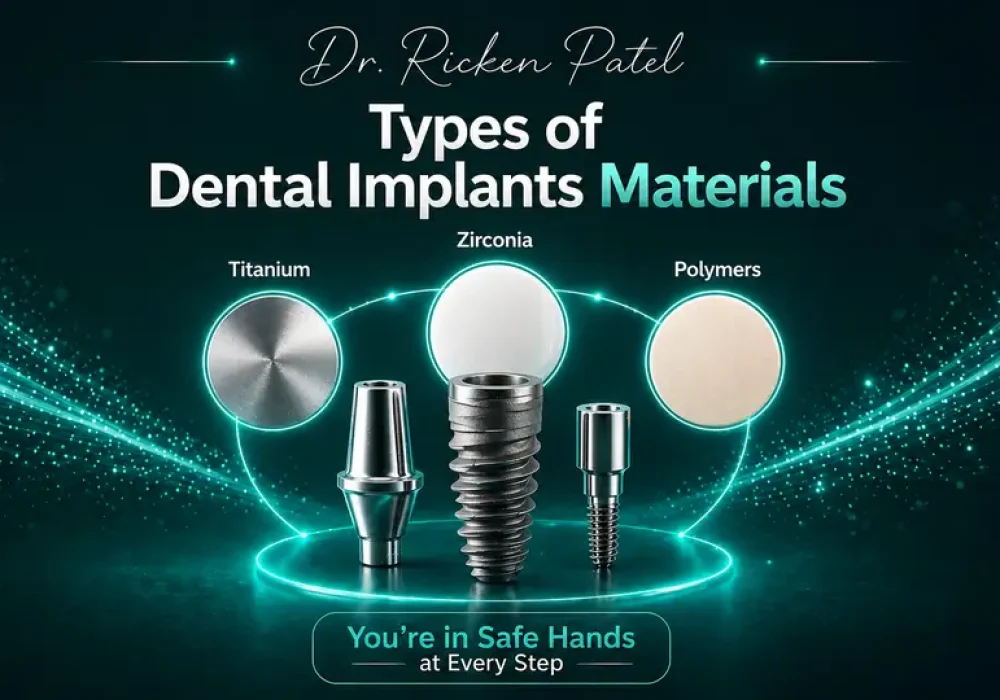
Dental implants have become a top choice for replacing teeth because they look and feel completely natural. Once inserted into your jawbone, they create a stable base for dentures, crowns, and bridges, allowing you to eat comfortably and maintain your oral health. You might be wondering about the types of dental implants materials that work best with your body. To help you make an informed decision, this blog clarifies the types of implant materials in detail, underscoring which type works best for you.
Types of Dental Implants Materials
Dental implant materials are carefully selected for their durability and long-term performance. Here are the most common types of dental implants materials:
1. Titanium
Titanium is considered the gold standard in dental implants and is the most widely used material due to its ability to bond naturally with the jawbone. It has been successfully used in dental implants for decades.
Advantages of Titanium
- It’s strong and able to create a durable base for dental implants.
- It’s lightweight and doesn’t cause discomfort.
- Proven to be safe, as titanium alloys are biocompatible with gum tissue and compact bone, enhancing bone volume and helping with tissue healing.
- With a proven track record of longevity, it can last for many years with proper care.
Disadvantages of Titanium
- Less natural in appearance, which makes some patients not choose it, particularly for the front teeth.
2. Zirconia
For those with a metal allergy, zirconia can be the right choice. Anyone can also get them. It offers aesthetic properties because it efficiently resembles natural teeth.
Advantages of Zirconia
- Being a metal-free option helps a wide range of patients with metal allergies to safely use them.
- It offers excellent soft tissue healing properties.
- Having mechanical strength and high resistance to tensile stress.
Disadvantages of Zirconia
- Implanting it is more complex than titanium.
3. Polymers
A great option for dental implants, although it is less common than the other types of dental implants materials.
Advantages of Polymers
- They are easier to influence.
- A good option for patients with metal allergies or sensitivities.
- Offering an aesthetic outcome.
Disadvantages of Polymers
- They are not as durable as some of the others.
4. Ceramics
They are durable and give a natural appearance. Some dental professionals tend to use them because they don’t cause risks of allergic reactions to metal alloys.
Advantages of Ceramics
- Providing excellent aesthetic properties and dental crowns resembling natural teeth.
- They also have great physical properties, including high mechanical strength and high resistance to tensile stress.
- Improving bone volume.
Disadvantages of Ceramics
- They are more prone to bone recession and need bone augmentation procedures to place them correctly in the oral cavity.
- They don’t last as long as titanium or zirconia implants.
5. Other Miscellaneous Metals
While titanium and zirconia are the most common, other metals like stainless steel, gold, and cobalt-chromium can be used for very specific dental needs. These materials are known for being incredibly strong and long-lasting. However, they are used less often today because modern alternatives usually offer better compatibility with the jawbone for most patients.

What is the Best Material for Dental Implants?
Choosing from dental implant material options is critical to the success of the treatment because the implant material properties significantly impact the implant’s strength, durability, and longevity.
Each material has its own advantages and limitations, which is why consulting an experienced cosmetic dentist is essential. They can evaluate your condition and recommend the most suitable solution.
Overall, titanium and zirconia are the most commonly used implant materials for those who don’t struggle with metal allergy, while ceramic implants are another good alternative.
Read also about: Are Dental Implants Safe for Diabetics?
Restore Your Beautiful Smile With Dr. Ricken Patel
If you’re considering dental implants and want to know the best types of dental implants materials for long-lasting results, Dr. Ricken Patel’s clinic is here to guide you in choosing the most suitable option for your needs from the types of materials used for dental implants.
We offer advanced dental implant treatments using the latest technologies and high-quality materials to restore both function and the natural beauty of your smile.
Contact us today to schedule your consultation and get clear, expert answers to all your dental implant questions.
Conclusion
Dental implants have been considered the most advanced and reliable solutions for replacing missing teeth, giving you a safe and long-lasting outcome. That’s why learning about types of dental implants materials plays an important role in the success of this procedure, which makes it a must to select them carefully. Just identify your priorities and find what matches them from the types we have mentioned in this blog.
FAQs About Types of Dental Implants Materials
1. Is the Material 100% Titanium?
It’s often made from medical-grade titanium or titanium alloys, which is not always 100% pure titanium; they may include alloys to improve its durability.
2. Is Titanium Safe with MRI scans?
It’s compatible with MRI scans, as it’s made from materials that do not react to magnetic fields.
3. Can anyone Get Dental Implants?
If a person has healthy gums and adequate jawbone density, they can get it. However, it requires a comprehensive checkup from a professional.
4. When is a Dental Implant the Wrong Choice?
If you have severe bone loss or uncontrolled diabetes. You will need to handle them first.