
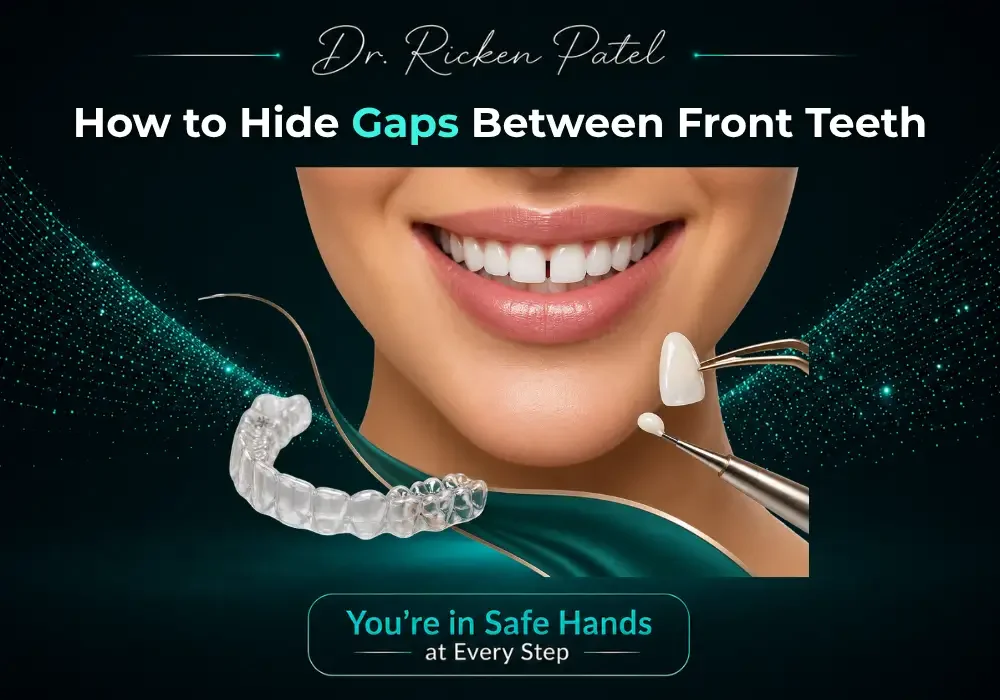
Love it or hate it, that gap between your front teeth, clinically known as a diastema, is more than just a cosmetic quirk. It can trap food, shift your bite, and impact your daily confidence. If you are wondering how to hide gaps between front teeth, you need solutions backed by real dentistry, not just quick fixes. Drawing on over 15 years of experience and 15,000+ successful smile transformations, this guide explores exactly why these spaces form. From simple dental bonding to custom porcelain veneers, discover the most natural, long-lasting treatments to upgrade your smile.
What Are The Gaps Between Teeth?
A gap between your teeth, clinically known as a diastema, can show up anywhere in your mouth, though it’s definitely most noticeable when it sits right between your upper front teeth.
For More Information Read: What Is a Malocclusion?
What Causes Gaps Between Front Teeth?
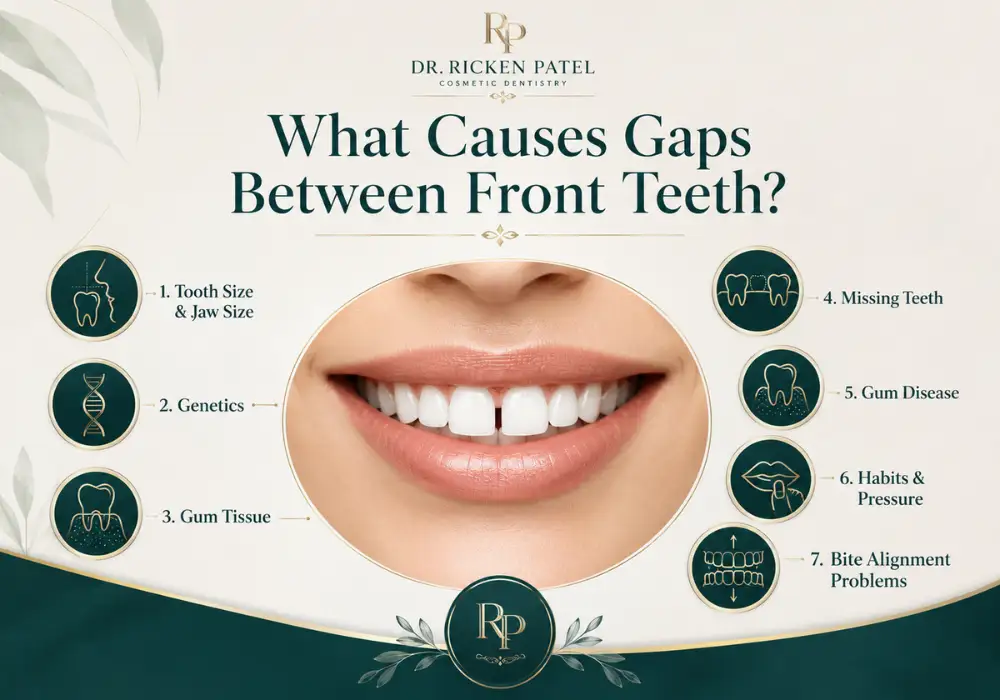
Gaps between front teeth can develop for several reasons. Some are natural and stable, while others appear slowly over time.
1-Tooth Size And Jaw Size
A gap can form when the teeth are smaller than the available space in the jaw. This may make the front teeth look separated even when the bite is otherwise healthy.
2-Genetics
Spacing can run in families. If tooth size, jaw size, or front-tooth spacing is common in your family, you may be more likely to have a visible gap.
3-Gum Tissue Between The Front Teeth
Some patients have a thick or low band of tissue between the upper lip and the gums. This tissue can sometimes make it harder for the two upper front teeth to come together naturally.
4-Missing Teeth
When a tooth is missing, nearby teeth may drift into the open space. Over time, this can create new gaps or make existing spaces more noticeable.
5-Gum Disease
Gum disease can weaken the bone and soft tissue that support the teeth. When support is reduced, teeth may shift, loosen, or spread apart.
6-Habits And Pressure
Thumb sucking, tongue thrusting, prolonged pacifier use, and repeated pressure from the tongue can contribute to tooth spacing or push the front teeth forward.
7-Bite Alignment Problems
If the upper and lower teeth do not meet evenly, pressure can be uneven across the smile. Over time, this may contribute to shifting, spacing, and tooth wear
Effects Of Gapped Teeth
Gaps can affect appearance, function, and confidence in some patients.
Including:
- A smile that looks uneven or unfinished.
- Food trapping between the teeth.
- Speech changes with larger front gaps.
- Gum irritation food often collects in the space.
- Tooth shifting when a gap is related to missing teeth.
- Bite imbalance if spacing is part of a larger alignment issue.
- Lower confidence when smiling, speaking, or taking photos.
A cosmetic dentist can determine whether the gap is mainly cosmetic or connected to tooth movement, gum support, or bite function.
Best Ways To Hide Gaps Between Front Teeth
So, how to hide gaps between front teeth depends on the cause, size of the space, tooth shape, gum health, and bite stability. We Will Explain The Best Ways to hide gaps:
1-Porcelain Veneers
Porcelain veneers are thin, custom-made shells placed over the front surface of teeth. They can make front teeth look wider, more even, and better shaped, which can help close or disguise small to moderate gaps.
According to the American Dental Association, veneers are custom-made shells designed to cover the front side of teeth. ADA patient information also explains that veneers may be used to mask gaps in a smile.
2-Dental Bonding
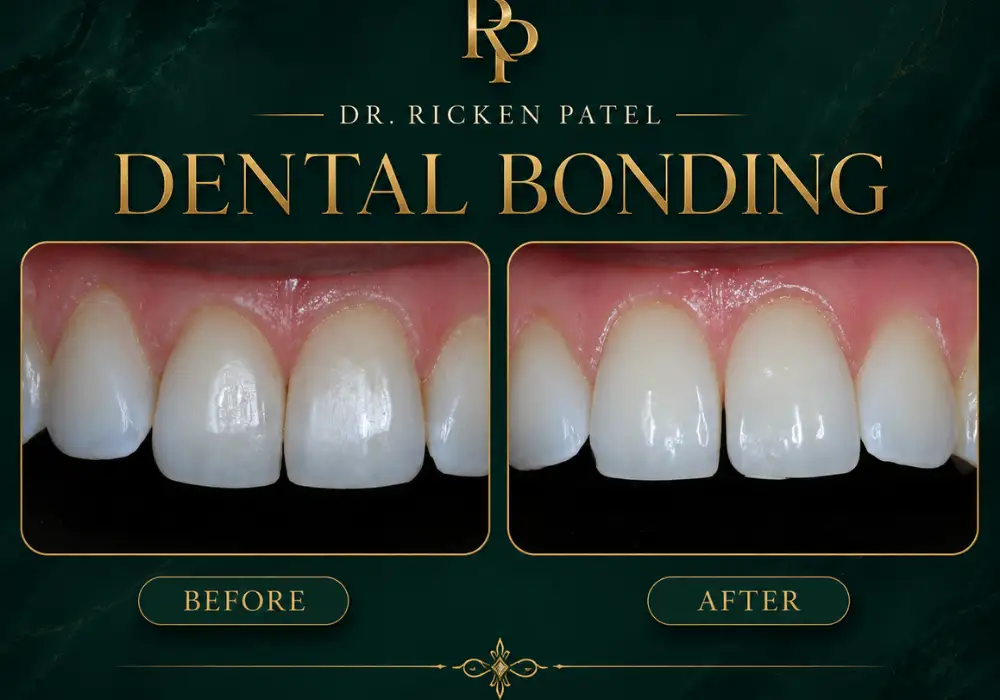
Dental bonding uses tooth-colored composite resin to reshape the sides of the teeth and reduce the appearance of a gap. The material is applied, shaped, hardened, and polished to blend with the natural tooth.
3-Orthodontic Treatment
Orthodontic treatment uses braces or clear aligners to move teeth closer together. It corrects tooth position rather than simply covering the gap.
This option usually takes longer than bonding or veneers
Diagnosis And Tests For Gaps Between Front Teeth
Before deciding how to hide gaps between front teeth, a dentist should diagnose the cause of the space. Treating the appearance without checking the reason can lead to an unstable or unnatural result.
Diagnosis:
- Visual exam of the front teeth and spacing.
- Bite evaluation to see how the upper and lower teeth meet.
- Gum health check for recession, inflammation, or bone-support concerns.
- Dental X-rays when needed.
- Digital scans or impressions.
- Smile analysis to review tooth size, shape, and facial balance.
- Checking for missing teeth or tooth movement.
- Reviewing habits such as tongue thrusting or teeth grinding.
How To hide Gaps Between Front Teeth
The best treatment depends on what caused the gap and what the patient wants to improve.
- Best for small gaps: dental bonding.
- Best for gaps with tooth-shape or color concerns: porcelain veneers.
- Best for digital cosmetic planning: 3D printed veneers.
- Best for large gaps or tooth-position problems: orthodontic treatment.
- Best for damaged or weak teeth: dental crowns.
- Best for complete smile improvement: smile makeover.
Which Treatment Option Is Right For You
Still wondering which option is best for your smile? At Dr. Ricken Patel’s practice, treatment starts with understanding your gap, tooth shape, bite, gum health, and smile goals. As a Rutgers-trained cosmetic dentist and Smile Architect with 15+ years of experience, Dr. Patel uses personalized planning and smile simulation to help patients preview natural-looking results before choosing cosmetic dental services.
Looking to Improve Your Smile but Not Sure Where to Start?
Dr. Ricken Patel provides personalized smile consultations to help you choose the most suitable treatment for your teeth, bite, and smile goals
Trusted by 15,000+ Satisfied Patients
Conclusion
Deciding exactly how to hide gaps between front teeth comes down to understanding why the space is there in the first place. Whether your gap is caused by genetics, shifting teeth, or bite alignment, there is no single right answer. A simple space might just need a quick touch of dental bonding, while others might benefit from the transformative look of porcelain veneers or the structural shift of orthodontics.
FAQs About How to Hide Gaps Between Front Teeth
1. Can I hide gaps between front teeth without braces?
Yes, some front-tooth gaps can be improved without braces. Depending on the cause
2. How to reduce gap between teeth naturally at home?
You cannot safely reduce a true gap between teeth naturally at home. Brushing, flossing, and healthy habits can protect the gums and help prevent some spacing from getting worse
3. How to close a gap in your teeth at home?
You should not try to close a gap in your teeth at home. DIY methods such as rubber bands, clips, or online devices can damage the gums, roots, and bone around the teeth.
4. How to fix a gap in your teeth at home?
A tooth gap cannot be properly fixed at home.
5. How to make your teeth closer together without braces?
If the gap is small, dental bonding or porcelain veneers may make the teeth look closer together without braces.
6. Are porcelain veneers good for gaps between front teeth?
Yes, porcelain veneers are a good option when the gap appears with small teeth, uneven shape, discoloration, or worn edges.
7. Can a cosmetic dentist fix gaps between front teeth?
Yes. A cosmetic dentist can evaluate the gap