
Look closely at your front teeth in the mirror. Are the edges starting to look clear, glassy, or slightly chipped? That is acid actively dissolving your smile, so making an effective dental enamel erosion treatment non-negotiable. Since lost enamel cannot be restored naturally, untreated erosion can expose the underlying dentin, leading to sensitivity, discoloration, and progressive tooth damage. In this guide, we break down exactly how modern dentistry can rebuild your tooth’s armor and reverse the damage before it hits your nerves.
What Is Enamel Erosion?
Enamel erosion is the permanent loss of tooth structure caused by acid wear, entirely independent of bacteria. Your tooth’s outer layer consists of highly mineralized hydroxyapatite crystals. When exposed to daily dietary or stomach acids, these minerals dissolve, thinning the tooth’s protective shield and leaving it vulnerable.
According to the National Institutes of Health (NIH), enamel erosion is completely irreversible. Because enamel cannot self-repair like bone, exposing the underlying dentin triggers rapid structural decline, making your teeth highly vulnerable to fractures and deep decay.
Signs And Symptoms Of Enamel Erosion
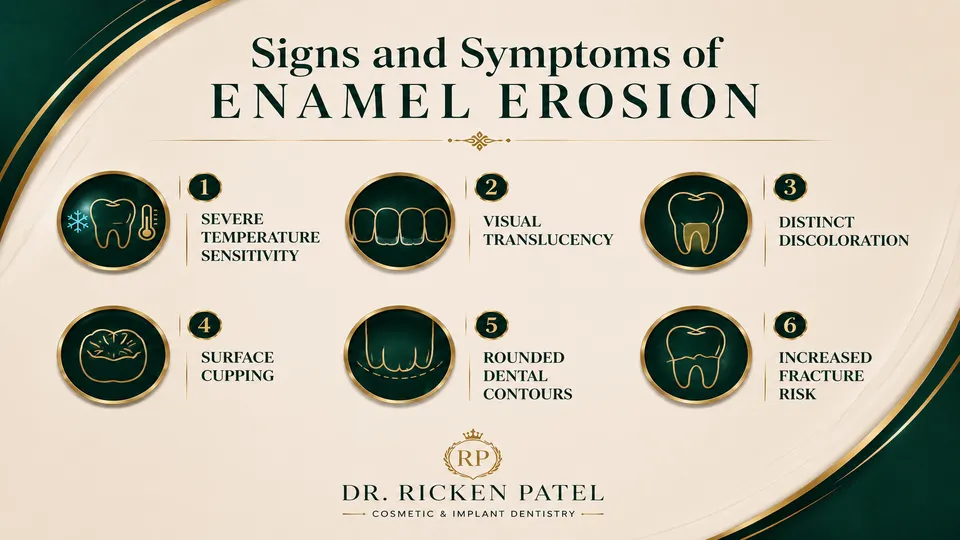
Enamel erosion starts silently, but it doesn’t stay hidden for long. Once the protective outer enamel thins, it exposes the yellow dentin layer, opening up microscopic pathways straight to your nerves. So, look out for these clear warning signs that indicate your teeth are losing their defense system:
- Severe Temperature Sensitivity: Sharp, sudden pain when consuming hot, cold, or highly sweet foods and liquids due to exposed dentin tubules.
- Visual Translucency: The biting edges of the front teeth appear clear, glassy, or thin.
- Distinct Discoloration: Teeth take on a dull, dark, or distinctly yellow hue as the inner dentin shines through the thinned outer layer.
- Surface Cupping: Small, rounded indentations or craters develop on the chewing surfaces of the molars.
- Rounded Dental Contours: Teeth lose their sharp, clean architectural lines and look noticeably rounded or shortened.
- Increased Fracture Risk: The development of microcracks, jagged edges, and chips along the chewing margins during normal eating.
What Causes Enamel Erosion?
Enamel erosion occurs when acids lower the oral pH below the critical threshold, causing the enamel’s mineral content to dissolve. According to clinical guidelines from the American Dental Association (ADA), enamel erosion stems from two primary sources:
- Intrinsic Causes (Inside the Body): Chronic conditions like GERD (acid reflux), bulimia, or severe morning sickness force highly destructive stomach acid (pH 1.0 to 2.0) into the mouth, rapidly melting your teeth’s armor.
- Extrinsic Causes (Outside the Body): Routine exposure to acidic foods, beverages, or airborne industrial chemicals directly corrodes the enamel matrix from the outside.
Foods And Drinks That Can Cause Enamel Erosion
Diet is the leading cause of external enamel damage. Because enamel dissolves at a critical pH of 5.5, anything more acidic actively strips essential minerals from your teeth.
The primary dietary culprits are:
- Carbonated Soft Drinks: Both regular and diet sodas contain high concentrations of phosphoric and citric acids, maintaining a highly corrosive pH between 2.5 and 3.2.
- Citrus Fruit Juices: Lemon, grapefruit, orange, and apple juices contain high levels of natural citric acid that soften the enamel matrix upon contact.
- Sports and Energy Drinks: These beverages feature high titratable acidity and sticky sugars that adhere to surfaces, multiplying their destructive potential.
- Commercial Kombucha and Vinegar: Touted for wellness, these highly acidic liquids directly corrode teeth if consumed daily without neutralization.
- Wine: Both red and white wines contain tartaric and malic acids that simultaneously erode enamel and stain the vulnerable dentin underneath.
Best Dental Enamel Erosion Treatment In NJ
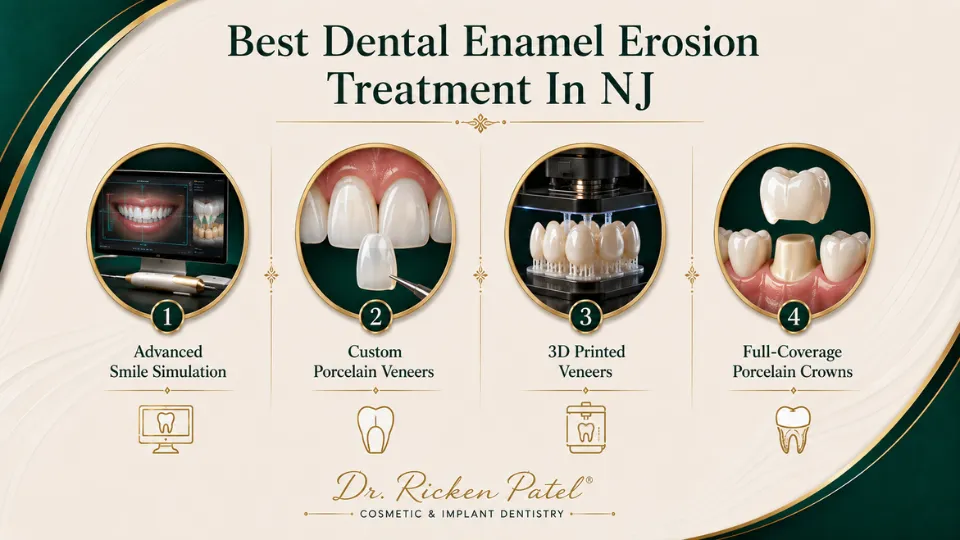
Once enamel loss progresses past simple softening, advanced dental enamel erosion treatment is critical to prevent total structural failure. A cosmetic dentist uses a conservative, minimal-prep approach to preserve natural teeth while completely sealing exposed pathways to eliminate nerve pain.
So, depending on the stage of acid damage, these are the standard clinical options used to rebuild your teeth:
1- Advanced Smile Simulation
Before treatment begins, a digital smile simulation maps out the missing tooth structure. This gives you a clear preview of the final look, ensuring the restoration matches your face perfectly.
2- Custom Porcelain Veneers
For teeth with moderate to advanced enamel thinning on the front surfaces, a custom porcelain veneer provides durable rehabilitation. It serves as a premium, artificial shield that physically replaces lost enamel. This protects the vulnerable underlying layers from future acid wear while instantly correcting chips, shortened edges, and deep internal yellowing.
3- 3D Printed Veneers
Utilizing cutting-edge dental technology, 3D printed veneers offer a highly precise, high-strength intervention to replace missing tissue. They completely seal exposed dentin tubules, instantly stopping chronic temperature sensitivity and rebuilding a natural, healthy appearance with minimal lifestyle downtime.
4- Full-Coverage Porcelain Crowns
When acid completely degrades a tooth, full-coverage porcelain crowns are required. They encase the tooth down to the gumline to fully restore your bite alignment, height, and chewing strength.
How To Prevent Enamel Erosion?
While clinical treatments repair existing damage, daily prevention protects your remaining natural tooth structure.
Recommends steps to safeguard your teeth against acid wear:
- Modify Ingestion Techniques: Use a straw placed toward the back of the mouth when drinking acidic beverages to minimize direct contact with teeth.
- Delay Post-Meal Brushing: Wait at least 30 to 60 minutes after consuming acidic foods or drinks before brushing.
- Neutralize the Oral Environment: Rinse with water or baking soda right after acid to quickly raise mouth pH.
- Utilize Remineralization Therapies: Use fluoride or nano-hydroxyapatite toothpastes to rebuild weakened surface minerals.
- Enhance Salivary Flow: Chew sugar-free xylitol gum to boost saliva, buffer acid, and restore essential minerals.
Read More About: How To Fix Enamel On Teeth?
Which Enamel Erosion Treatment Is Right For You?
Selecting the correct dental enamel erosion treatment in New Jersey depends entirely on a comprehensive clinical evaluation of the depth and scope of tissue degradation. No two cases of erosion are identical, and an optimal outcome requires a highly customized prescription.
Protect your natural teeth with targeted cosmetic dental services designed to counteract severe enamel erosion. Dr. Patel creates custom restorations that strengthen your bite, restore areas affected by acid wear, and improve the overall appearance of your smile.
Ready to protect your eroded teeth?
Strengthen and rebuild weakened enamel with advanced restorative dental treatments designed to protect your teeth.
Trusted by 15,000+ Satisfied Patients
Conclusion
Finally, when enamel wears away, it’s gone for good. This gradual damage strips your teeth of their armor, leaving them vulnerable to sharp pain, discoloration, and decay. While lost enamel cannot be restored naturally, early intervention can help prevent further damage and protect the remaining tooth structure. For wear that has already happened, timely dental enamel erosion treatment will repair the structural damage, protect your teeth from further harm, and restore your confidence.
FAQ About Dental Enamel Erosion Treatment
1. Can eroded dental enamel grow back naturally over time?
No. Dental enamel does not contain living cells, making natural regeneration biologically impossible.
2. How do I know if my tooth sensitivity is caused by enamel erosion?
Sensitivity driven by erosion typically manifests as a sharp, sudden flash of pain when your teeth are exposed to cold air, hot liquids, or highly sweet sugary treats.
3. Will a porcelain veneer look natural if I have severe enamel loss?
Yes. When crafted by an elite professional, a premium porcelain veneer blends seamlessly with your surrounding natural teeth.
4. How long does a dental enamel erosion treatment last?
The longevity of your treatment depends on the specific restorative modality chosen and your commitment to ongoing oral care.