
A chipped tooth can happen in a fraction of a second, but the structural damage often runs much deeper than what you see in the mirror. According to the American Association of Endodontists, dental trauma accounts for over five million fractured teeth annually in the U.S. If you are searching for how to fix a chipped tooth, the required clinical solution depends entirely on the fracture’s depth. This guide provides a definitive, evidence-based breakdown of immediate pain-relief steps and the professional treatments needed to permanently restore your oral health.
What Is A Chipped Tooth?
A chipped tooth occurs when a portion of the tooth enamel, the hard, mineralised outer layer of your tooth, fractures away. The severity can range from a hairline surface crack that’s purely cosmetic to a deep fracture that exposes the pulp (the inner tissue housing nerves and blood vessels).
Signs And Symptoms Of A Chipped Tooth
One of the most important things to understand about chipped teeth: pain is not always present, even when the damage is significant. Here are the signs that tell the full story:
- Visible jagged or rough edge: often felt with the tongue before it’s seen
- Sharp sensitivity: a zinging pain triggered by hot, cold, sweet, or acidic foods or beverages
- Intermittent toothache: pain that appears during or after biting, not constantly
- Gum swelling near the tooth: a potential indicator of pulp involvement or early infection
- Soft tissue cuts: the sharp edge irritates or lacerates the tongue or inner cheek
- Altered bite sensation: the tooth feels “off” when the upper and lower teeth come together
- No symptoms at all: minor chips, craze lines, and small enamel fractures can be entirely painless
What To Do Immediately After Chipping A Tooth?
What you do in the first hour after chipping a tooth can influence both your comfort and your treatment options. Follow these steps:
- Step 1 — Rinse with Warm Salt Water: Swish to reduce bacteria and keep the fractured area clean.
- Step 2 — Preserve the Fragment: Store the broken piece in whole milk or saline solution. Your dentist may be able to reattach it.
- Step 3 — Control Bleeding: Apply steady pressure with clean gauze for 10–15 minutes and keep your head elevated.
- Step 4 — Cover the Sharp Edge: Apply dental wax or sugar-free gum over the jagged tooth to prevent cutting your tongue or cheeks.
- Step 5 — Manage Pain: Take over-the-counter pain relievers like ibuprofen or acetaminophen. Never apply aspirin directly to the gums or teeth, as it causes severe chemical burns.
- Step 6 — Modify Your Diet: Avoid hard, crunchy, and extreme-temperature foods. Always chew on the uninjured side to protect the tooth.
- Step 7 — Contact Your Dentist: Treat a chipped tooth as a dental injury. Get evaluated within 24–48 hours, or seek same-day emergency care if you experience pain, swelling, or bleeding.
5 Most Common Causes Of A Chipped Tooth
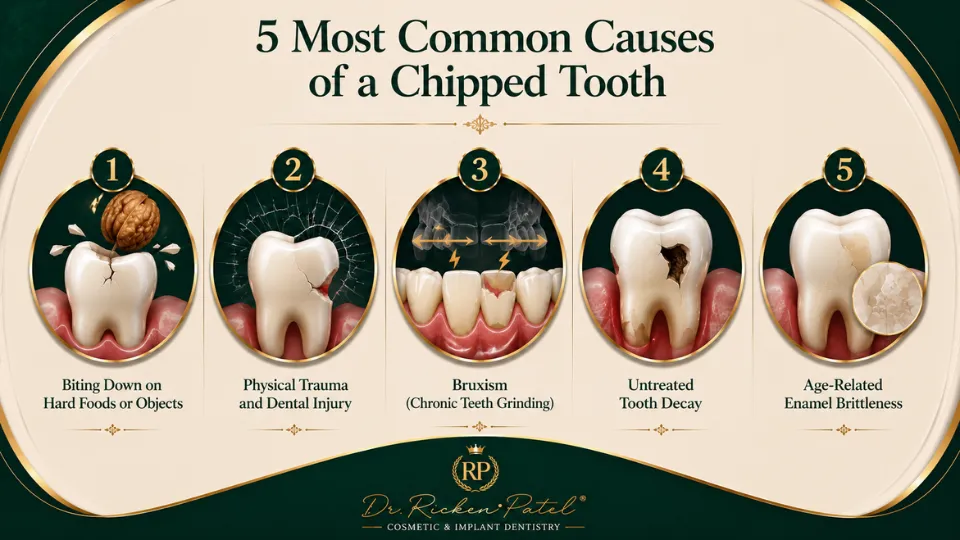
Identifying the exact cause of your chipped tooth is crucial for choosing the right treatment. These are the five most common triggers.
1. Biting Down On Hard Foods Or Objects
Chewing hard items like ice, popcorn kernels, or pens creates concentrated pressure that can instantly exceed the tensile strength of even healthy enamel.
2. Physical Trauma And Dental Injury
Sudden facial impacts from sports, accidents, or falls can instantly fracture teeth.
3. Bruxism (Chronic Teeth Grinding)
Bruxism (involuntary teeth grinding) affects 8–31% of the population. The unregulated, extreme force of nighttime grinding flattens cusps, thins enamel, and ultimately fractures the tooth.
4. Untreated Tooth Decay
Tooth decay dissolves enamel and dentin, severely weakening the tooth from the inside out. These compromised teeth can easily fracture under normal chewing forces.
5. Age-Related Enamel Brittleness
According to the ADA, Decades of cumulative wear from acid exposure, chewing forces, and temperature changes weaken enamel’s structural resilience, making teeth prone to chipping during routine meals.”
When Should You See A Dentist For A Chipped Tooth?
Every chipped tooth requires an evaluation to prevent hidden structural damage or infection. You should book an appointment if you experience:
- Severe Pain or Bleeding: Indicates immediate nerve exposure or root damage.
- A Loose Tooth: Needs immediate stabilisation to avoid tooth loss.
- Sharp Edges: Can quickly cut your tongue or inner cheek.
- Aesthetic Damage: Even for painless, minor chips, an experienced cosmetic dentist can flawlessly restore the tooth’s appearance and seal the enamel.
How to Fix a Chipped Tooth?
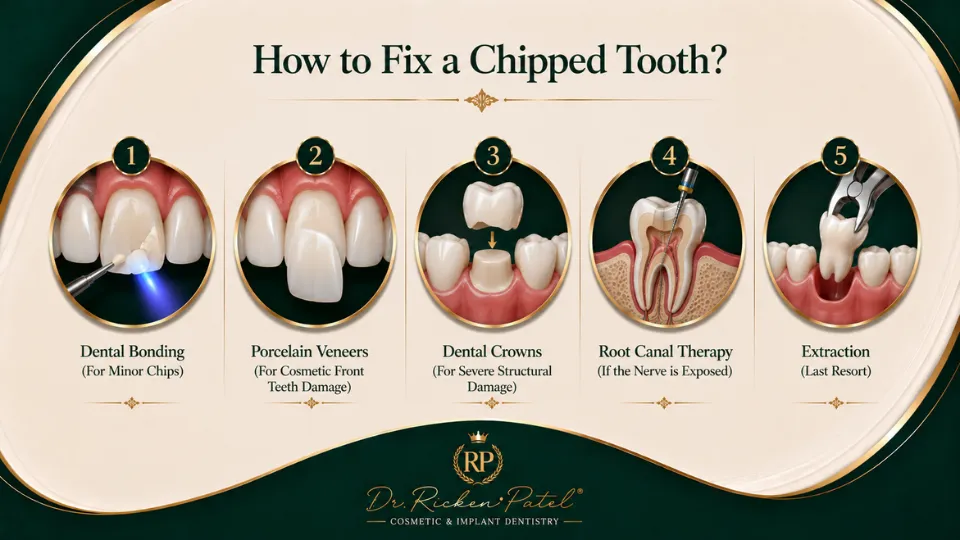
The best repair depends on the extent of the damage. Here are the exact cosmetic dental services used to restore a chipped tooth:
1- Dental Bonding (For Minor Chips)
The fastest and most minimally invasive option. We apply a tooth-colored composite resin to the damaged area, sculpt it to match your natural tooth contour, and harden it instantly with a special UV light.
2- Porcelain Veneers (For Cosmetic Front Teeth Damage)
Ideal for cosmetic damage on front teeth. Applying porcelain veneers directly over the front surface of the tooth permanently masks the chip and restores a durable, natural-looking appearance.
3- Dental Crowns (For Severe Structural Damage)
For severe structural breaks, dental crowns cap the remaining tooth to restore strength and prevent decay. If the damage is widespread, crowns become the foundation of a full mouth reconstruction.
4- Root Canal Therapy (If the Nerve is Exposed)
If the break is deep enough to expose the inner pulp, you will likely feel severe pain. We must perform a root canal to clear the compromised nerve and save the tooth, followed immediately by a protective crown.
5- Extraction
Extraction is the last resort for teeth cracked below the gum line. If several teeth are similarly damaged and must be removed, All-on-4 dental implants offer a permanent, full-arch replacement.
Read Also: How to fix cracks in teeth?
Side Effects of a Chipped Tooth if Left Untreated?
Delaying treatment is a costly mistake. What starts as a simple, inexpensive fix can quickly escalate into a painful dental emergency:
- Fractures Worsen: Daily chewing pushes the crack deeper into the nerve, turning a quick fix into a costly root canal.
- Severe Infections & Bone Loss: Exposed dentin allows bacteria to infect the pulp and damage the jawbone.
- Chronic Pain & Jaw Strain: Exposed nerves cause intense sensitivity, while an altered bite leads to chronic TMJ headaches.
- Gum Disease: Jagged edges trap plaque, accelerating localised gum disease.
Dr Ricken Patel, an expert cosmetic dentist with 15+ years of experience, uses advanced smile simulation to show exactly how your flawless, natural-looking repair will look before treatment even begins.
Ready to Restore Your Flawless Smile?
A chipped tooth shouldn’t define your smile. Experience a seamless, invisible repair that brings back your confidence and leaves your teeth looking perfectly natural.
Trusted by 15,000+ Satisfied Patients
Conclusion
Because enamel cannot regenerate, leaving a chipped tooth untreated only invites deeper fractures and serious root infections. Understanding exactly how to fix a chipped tooth depends entirely on the severity of the damage, which is why an immediate clinical evaluation is crucial. Acting promptly is the only way to preserve your natural tooth structure, prevent severe pain, and eliminate the need for more invasive and complex treatments down the road.
FAQ About How To Fix A Chipped Tooth
1. Can a chipped tooth heal on its own?
No. Tooth enamel does not contain living cells capable of regenerating lost structure.
2. How to heal a cracked tooth naturally?
There is no clinically validated natural method to heal a cracked or chipped tooth.
3. Is fixing a chipped tooth expensive?
Treatment costs vary based on the type of restoration needed, the tooth’s location in the mouth, and your geographic area.
4. What happens if I ignore a chipped tooth for too long?
A chip that is ignored can develop into a deepened fracture, pulp exposure, bacterial infection, dental abscess, and ultimately tooth loss.
5. Can a chipped tooth cause headaches?
Yes, indirectly. A fracture that alters the bite places uneven mechanical stress on the jaw muscles and temporomandibular joint (TMJ), which can manifest as jaw tension, facial muscle fatigue, and tension-type headaches.