
A bite problem can be easy to ignore until it starts affecting how you chew, speak, smile, or feel about your teeth. If you are searching “what is a malocclusion”, you may have noticed crowded teeth, an uneven bite, jaw discomfort, or a smile that does not feel balanced. This blog explains the causes, symptoms, diagnosis, treatment options, and when a cosmetic dentist may help improve both function and smile confidence.
What Is A Malocclusion?
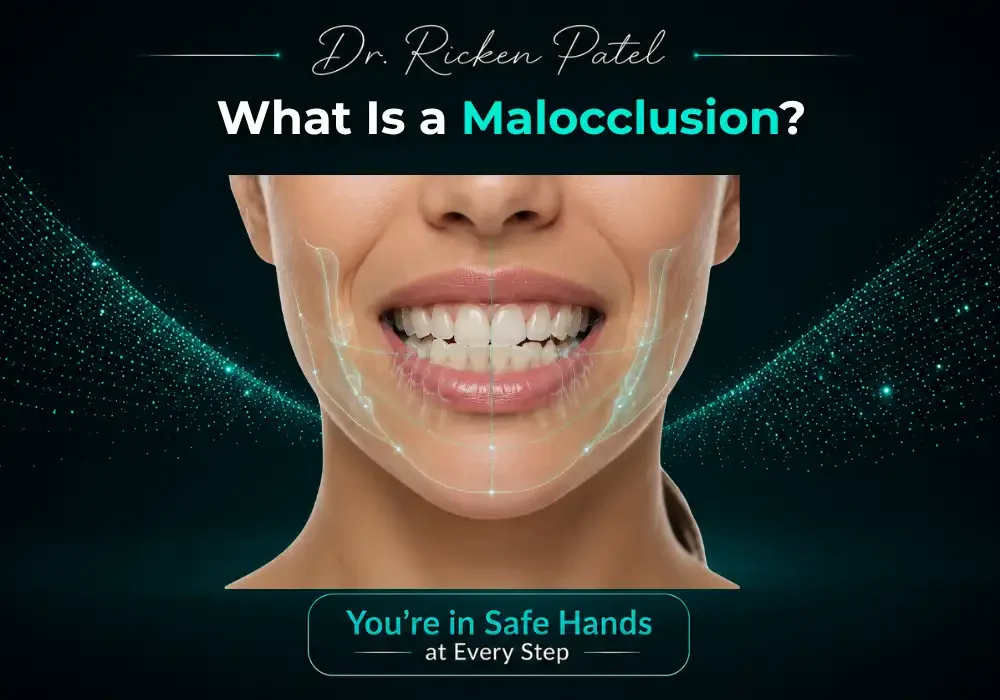
What is a malocclusion? A malocclusion is a misaligned bite, meaning the upper and lower teeth do not fit together properly when the mouth closes. It may appear as crowded teeth, spacing, an overbite, an underbite, a crossbite, or an open bite. In some patients, it affects only the appearance of their smile, while in others, it can affect chewing, speech, tooth wear, jaw comfort, and facial balance.
According to a systematic review and meta-analysis published in the European Journal of Paediatric Dentistry, the worldwide prevalence of malocclusion is about 56%. Because bite alignment can affect both function and appearance, a cosmetic dentist should evaluate the bite before planning cosmetic dental services
What Causes A Malocclusion?
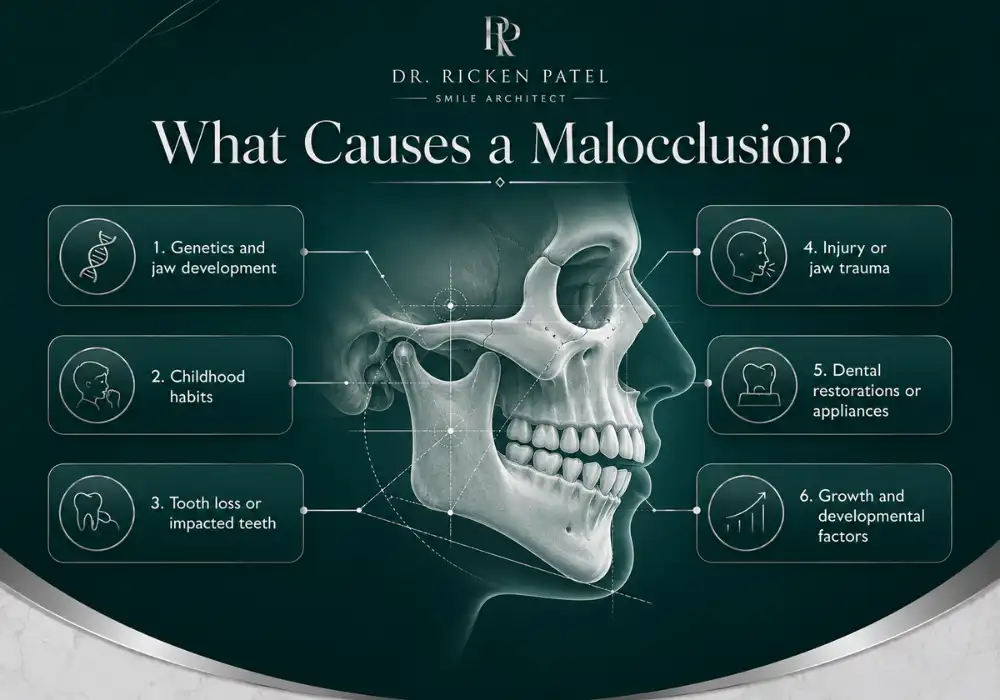
1-Genetics And Jaw Development
Many bite problems are inherited. A person may have a small jaw, large teeth, missing teeth, extra teeth, or an imbalance between the upper and lower jaw.
2-Childhood Habits
Habits such as thumb sucking, tongue thrusting, prolonged pacifier use, and bottle use beyond the early childhood years may affect how the teeth and jaws develop. These habits may increase the risk of an open bite, overjet, or other alignment problems.
3-Tooth Loss Or Impacted Teeth
Missing teeth can allow nearby teeth to shift into the open space. Impacted teeth, extra teeth, or abnormally shaped teeth may also disturb normal alignment.
4-Injury Or Jaw Trauma
A jaw fracture or facial injury can change how the upper and lower teeth fit together. If the bone heals in a shifted position, the bite may become uneven.
5-Dental Restorations Or Appliances
Ill-fitting crowns, fillings, retainers, or dental appliances can sometimes affect bite balance. This is why dental restorations should be carefully shaped and checked.
6-Growth And Developmental Factors
Some malocclusions result from jaw growth patterns. For example, the upper jaw may grow more than the lower jaw, the lower jaw may grow too far forward, or the jaws may not develop in proper balance.
What Are The Symptoms Of A Malocclusion?
Symptoms depend on the severity of the bite problem:
- Crowded, crooked, or spaced teeth.
- Upper teeth that overlap the lower teeth too much.
- Lower teeth that sit in front of the upper teeth.
- Teeth that do not meet when biting.
- Difficulty biting or chewing food.
- Uneven tooth wear.
- Jaw discomfort or muscle strain.
- Speech issues, including a lisp in some cases.
- Mouth breathing.
- Biting the cheeks, lips, or tongue.
- A smile that looks unbalanced.
Diagnosing And Classifying Malocclusions
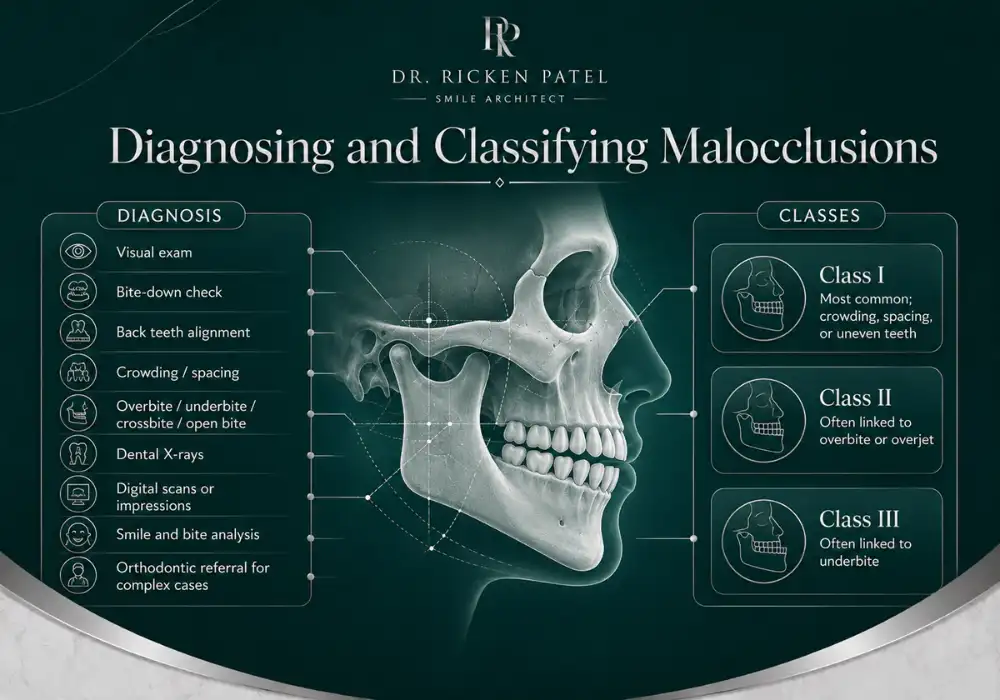
A cosmetic dentist can diagnose malocclusion by examining how the teeth and jaws fit together.
Diagnoses include:
- Visual exam of the teeth and bite.
- Ask the patient to bite down.
- Checking how the back teeth meet.
- Looking for crowding, spacing, overbite, underbite, crossbite, or open bite.
- Dental X-rays when needed.
- Digital scans or impressions.
- Smile and bite analysis.
- Referral to an orthodontist for complex cases.
Malocclusions are classified into three main classes:
Class I Malocclusion
Class I is the most common type. The bite relationship may be mostly normal, but the teeth may be crowded, rotated, spaced, or uneven.
Class II Malocclusion
Class II is often associated with an overbite or overjet. The upper teeth or upper jaw may sit too far forward compared with the lower teeth or jaw.
Class III Malocclusion
Class III is often associated with an underbite. The lower teeth or lower jaw may sit forward compared with the upper teeth or jaw.
How Is A Malocclusion Treated?
Treatment depends on the type and severity of the malocclusion. Not every case needs major treatment.
1-Clear Aligners Or Braces
Clear aligners and braces can move teeth into better positions. They may be used for crowding, spacing, overbite, underbite, crossbite, or open bite, depending on the case.
2-Tooth Reshaping Or Restoration Adjustment
If uneven restorations or rough tooth edges affect the bite, minor reshaping or adjustment may help after a proper bite evaluation.
3-Tooth Removal In Crowded Cases
In some crowded cases, tooth removal may be needed to create enough space for proper alignment.
4-Growth Guidance For children
In children, early treatment may guide jaw growth or correct habits before the bite becomes more complex.
5-Jaw Surgery For Severe Skeletal Problems
Severe jaw-position problems should be evaluated by a dental specialist first. Once the bite is stable, full mouth reconstruction can help restore chewing function, tooth support, and smile balance.
6-Cosmetic And Restorative Planning
For adults, malocclusion is part of a larger smile concern. A cosmetic dentist evaluates the bite before recommending cosmetic dental services
Read More About: How to Hide Gaps Between Front Teeth
Can Malocclusion Be Prevented?
Not every malocclusion can be prevented. Many cases are related to genetics. However, some risk factors can be reduced, especially during childhood.
Includes:
- Schedule regular dental checkups for children.
- Address thumb sucking, tongue thrusting, or prolonged pacifier use early.
- Treat baby-tooth loss or dental infections promptly.
- Protect the mouth during sports with a mouthguard.
- Replace missing teeth.
- Keep restorations, crowns, and dental appliances properly fitted.
- Maintain good oral hygiene to protect teeth and gums.
- Ask a dentist about bite concerns early
A healthy bite supports more than straight teeth. It can help protect chewing function, tooth stability, and long-term smile balance. Dr. Ricken Patel evaluates bite alignment before planning cosmetic dental services, helping patients achieve results that look natural, feel comfortable, and support lasting smile confidence
Protect your bite. Smile with confidence.
Dr. Ricken Patel provides personalized smile consultations to help you understand your bite, protect your teeth, and plan the right cosmetic dental treatment.
Trusted by 15,000+ Satisfied Patients
Conclusion
Understanding what is a malocclusion helps patients realize that a misaligned bite can affect more than tooth appearance. It may change how you chew, speak, smile, and how your teeth wear over time. The right dental evaluation can identify the cause, classify the bite problem, and guide better treatment. With early care and personalized planning, patients can protect their oral health, improve bite comfort, and create a more balanced, confident smile.
FAQ: What is A Malocclusion
1. What is a malocclusion in simple words?
A malocclusion is a misaligned bite. It means the upper and lower teeth do not fit together properly when the mouth closes.
2. Is malocclusion the same as crooked teeth?
Not always. Crooked teeth can be part of malocclusion, but malocclusion can also involve the jaws, bite position, overbite, underbite, crossbite, or open bite.
3. What causes malocclusion?
Malocclusion may be caused by genetics, jaw-size differences, childhood habits, missing teeth, impacted teeth, trauma, or poorly fitted dental restorations.
4. Can malocclusion affect chewing?
Yes. A misaligned bite can make it harder to bite or chew evenly. It may also cause uneven tooth wear or jaw strain.
5. Can malocclusion affect speech?
In some cases, yes.
6. Does every malocclusion need treatment?
No. Some mild cases do not need treatment.
7. How do dentists diagnose malocclusion?
Dentists diagnose malocclusion by examining the bite, checking how the teeth meet, reviewing symptoms, and using X-rays, scans, or referrals when needed.
8. Can a cosmetic dentist help with malocclusion?
A cosmetic dentist can evaluate how bite alignment affects smile appearance and treatment planning.
9. Can veneers fix malocclusion?
Veneers can improve tooth shape, color, and minor appearance concerns, but they do not correct major bite problems.