
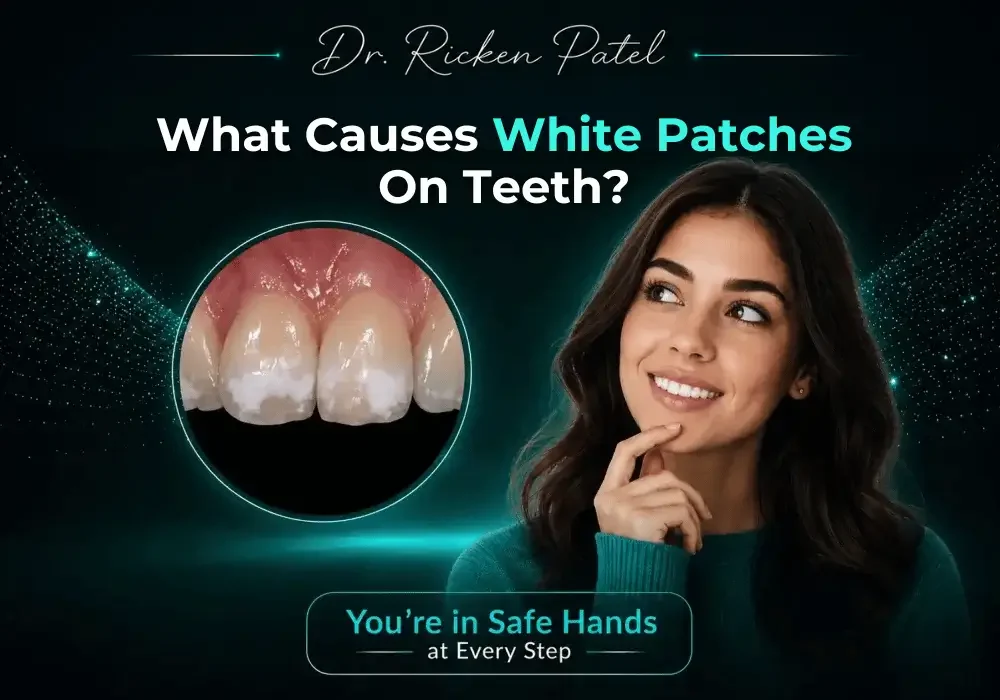
What causes white patches on teeth is one of the most common questions patients ask when they notice chalky white spots that do not match the rest of their smile. These white patches on teeth can be an early sign of enamel mineral loss, fluorosis, enamel defects, or developing tooth decay. That’s why understanding why teeth have white spots and what they mean can help you protect your oral health and choose the right treatment.
What Are White Patches On Teeth?
White patches on teeth are visible white or chalky areas that appear on the surface of a tooth and look different from the surrounding enamel. They can develop on one tooth or multiple teeth and may vary in size, shape, and brightness. These spots are usually linked to changes in the tooth enamel and may be either a cosmetic concern or a sign of an underlying dental issue.
According to the National Institute of Dental and Craniofacial Research, a white spot may appear when minerals have been lost from enamel, and this can be a sign of early tooth decay before a cavity forms.
What Causes White Patches On Teeth?
White patches on teeth can appear for several reasons, ranging from minor cosmetic concerns to early signs of enamel damage. So understanding what causes white patches on teeth can help determine the right treatment and prevent future dental problems.
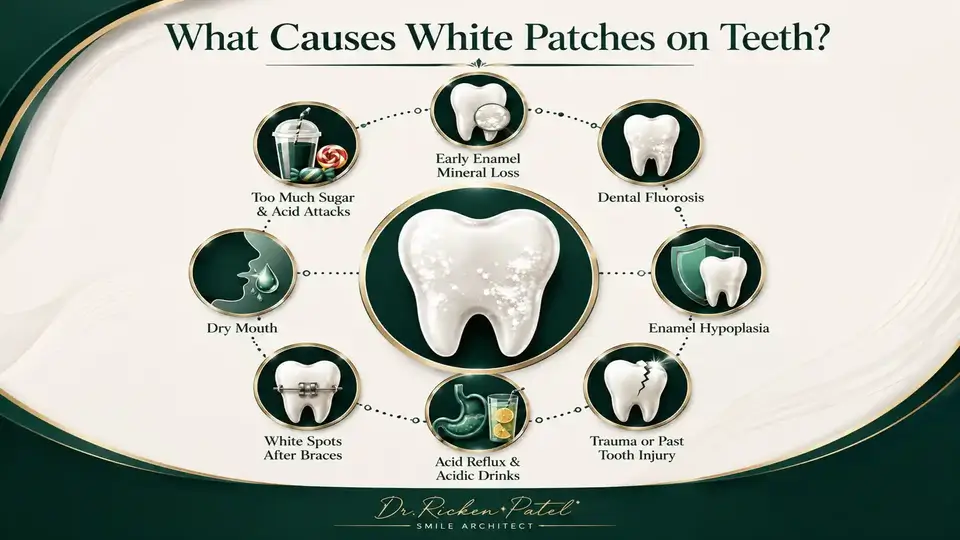
Here are the 7 most common causes:
1. Early Enamel Mineral Loss
Enamel demineralization is one of the most common causes of white patches on teeth. It occurs when plaque bacteria produce acids that remove minerals from the enamel, creating white, chalky spots.
2. Too Much Sugar And Frequent Acid Attacks
Diet plays a major role in white patches on teeth because frequent sugar exposure triggers repeated acid attacks that weaken enamel and can lead to white spots before a cavity forms. According to the World Health Organization, Dental caries affects about 2.5 billion people worldwide, and free sugars are a major risk factor for tooth decay. WHO recommends limiting free sugars to less than 10% of daily energy intake, and ideally below 5%.
3. Dental Fluorosis During Childhood
Another possible cause of white patches on teeth is dental fluorosis. This occurs when teeth are exposed to excessive fluoride during development, resulting in white lines, flecks, or patches on the enamel. According to the CDC, mild fluorosis is generally a cosmetic condition and does not affect tooth health.
4. Enamel Hypoplasia Or Weak Enamel Development
Some white patches on teeth are caused by enamel hypoplasia or hypomineralization, conditions in which enamel develops improperly and may be weaker than normal. These spots often appear when permanent teeth erupt
5. White Spots After Braces Or Orthodontic Treatment
White patches on teeth are common after braces because brackets and wires can make oral hygiene more difficult. When plaque accumulates around the brackets, enamel may lose minerals, leaving visible white marks after orthodontic treatment. A systematic review published in the Journal of Dentistry reported that white spot lesions during fixed orthodontic treatment had an incidence of 45.8% and a prevalence of 68.4%.
6. Dry Mouth, Acid Reflux, And Acidic Drinks
Dry mouth, acid reflux, and frequent consumption of acidic beverages can weaken enamel and increase the risk of white patches on teeth. Saliva plays an important role in protecting enamel and supporting remineralization.
7. Trauma Or Past Injury To A Tooth
A white spot on one tooth may result from past trauma or an enamel development defect. A dental exam can help identify the underlying cause and determine whether it is related to trauma, decay, fluorosis, or another enamel condition.
Read More About: human periodontal disease stages.
Are White Patches On Teeth A Sign Of Tooth Decay?
Yes, White patches on teeth can sometimes be an early sign of tooth decay. They often appear when enamel begins losing minerals before a cavity forms. This early stage may still be reversible with proper care and fluoride. However, not all white spots are caused by decay. They may also result from fluorosis, enamel defects, or tooth trauma.
Treatment Options For White Patches On Teeth
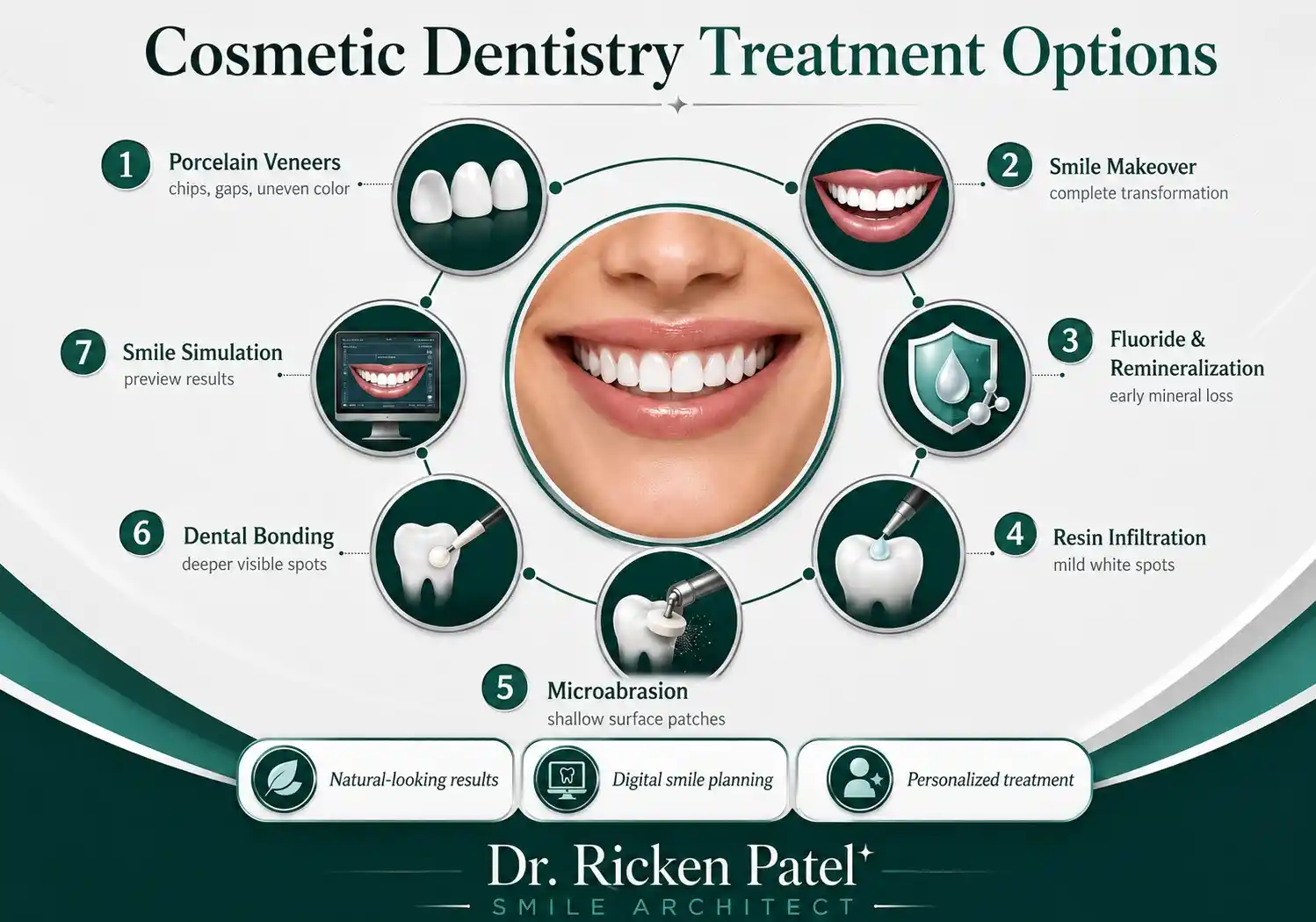
A cosmetic dentist should first determine whether the white spot is active decay, inactive enamel change, fluorosis, or a developmental defect. Once the cause is clear, the right cosmetic dental service can be chosen.
- Porcelain veneers – best for white spots combined with other cosmetic concerns, such as chips, gaps, or uneven tooth color.
- Smile makeover – best for patients seeking a complete smile transformation.
- Fluoride and remineralization – best for early enamel mineral loss.
- Resin infiltration – best for mild white spots and early demineralization.
- Microabrasion – best for shallow surface white patches.
- Dental bonding – best for deeper or more noticeable white spots.
For patients who want to preview possible results, smile simulation can help show how different cosmetic options may affect the final smile. Dr. Ricken Patel focuses on natural-looking cosmetic work, digital smile planning, and personalized treatment planning, which is especially helpful when treating visible front teeth.
How To Prevent White Patches On Teeth?
- Brush twice daily with fluoride toothpaste to help protect enamel from acid attacks.
- Floss every day to remove plaque between teeth and near the gumline.
- Limit sugary and acidic drinks
- Avoid frequent snacking
- Drink more water to support saliva and help wash away acids.
- Use extra care with braces by cleaning around brackets and wires carefully.
- Visit your dentist regularly
Transform Your Smile With Confidence
White patches on teeth can make your smile look uneven, especially when they appear on the front teeth. At Dr. Ricken Patel’s practice, cosmetic dental services are designed to improve these concerns while keeping the smile natural, balanced, and not overdone.
Dr. Ricken Patel is a Rutgers-trained cosmetic dentist and Smile Architect with more than 15 years of experience helping patients improve the health, function, and appearance of their smiles. His practice highlights 15K+ satisfied patients and 948 Google/Trustindex reviews, giving patients confidence when choosing treatment for visible smile concerns.
Noticing White Patches on Your Teeth?
Dr. Ricken Patel provides personalized cosmetic dental consultations to identify the cause of white spots and recommend the most suitable treatment for a natural-looking smile.
Trusted by 15,000+ Satisfied Patients
Conclusion
So, what causes white patches on teeth? The most common causes include enamel demineralization, early tooth decay, dental fluorosis, enamel hypoplasia, plaque buildup after braces, dry mouth, and frequent acid exposure. Some white spots are harmless cosmetic marks, while others are early warning signs that the enamel needs professional care.
FAQS About What Causes White Patches On Teeth
1. Is a white spot on my tooth always a cavity?
No. A white spot may be an early sign of decay
2. Can white patches on teeth go away naturally?
Some early white spots caused by mineral loss may improve with fluoride, saliva minerals, better hygiene, and diet changes.
3. What is the best treatment for white patches on teeth?
The best treatment depends on the cause.
4. Can whitening fix white spots?
Whitening may help overall tooth color, but it can sometimes make white spots more noticeable at first.
5. Are white spots after braces permanent?
They can be long-lasting, but they are often treatable. Depending on the depth
6. How can I prevent white spots on teeth?
- Brush twice daily with fluoride toothpaste
- clean between your teeth daily
- Limit sugary and acidic foods
- drink water, maintain dental visits
- Use extra hygiene tools if you have braces.
7. Should I see a cosmetic dentist for white patches on my teeth?
Yes, especially if the spots are on visible front teeth