
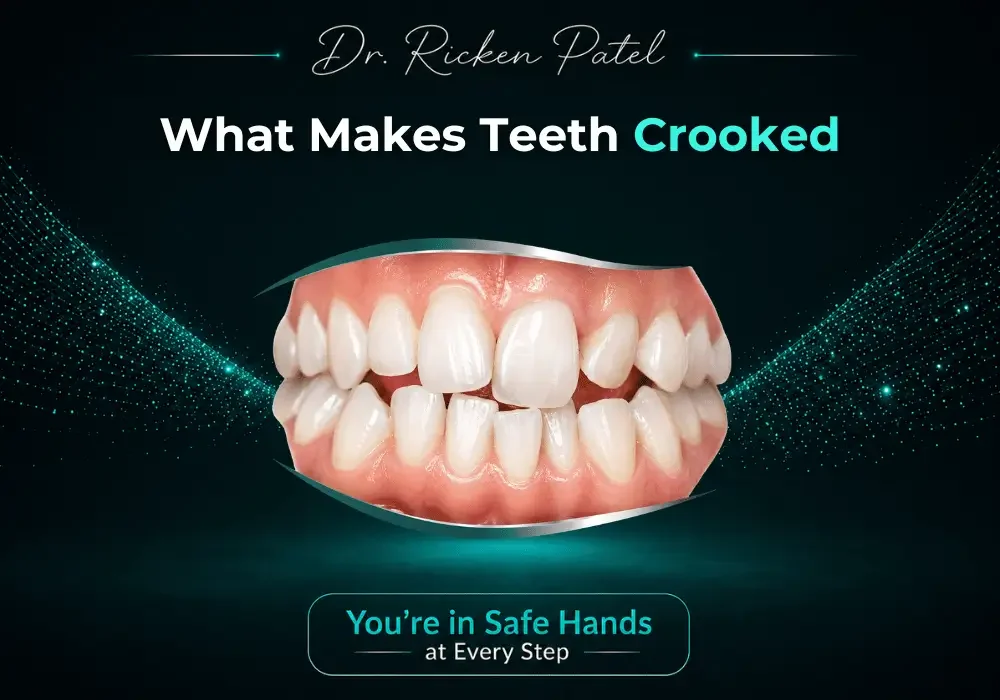
If you have noticed your teeth shifting, overlapping, or no longer fitting together the way they used to, you may wonder what makes teeth crooked in the first place. Crooked teeth can develop from jaw size, genetics, childhood habits, missing teeth, gum problems, or changes in the bite over time. In this blog, we will explain why teeth get crooked, how crooked teeth happen, what problems they can cause, and which treatment options may help improve both your smile and your oral health.
What Are Crooked Teeth?
Crooked teeth are teeth that are not properly aligned in the mouth. They may overlap, twist, tilt, rotate, crowd together, or leave uneven spaces between teeth. In many cases, crooked teeth are part of a larger bite issue called malocclusion.
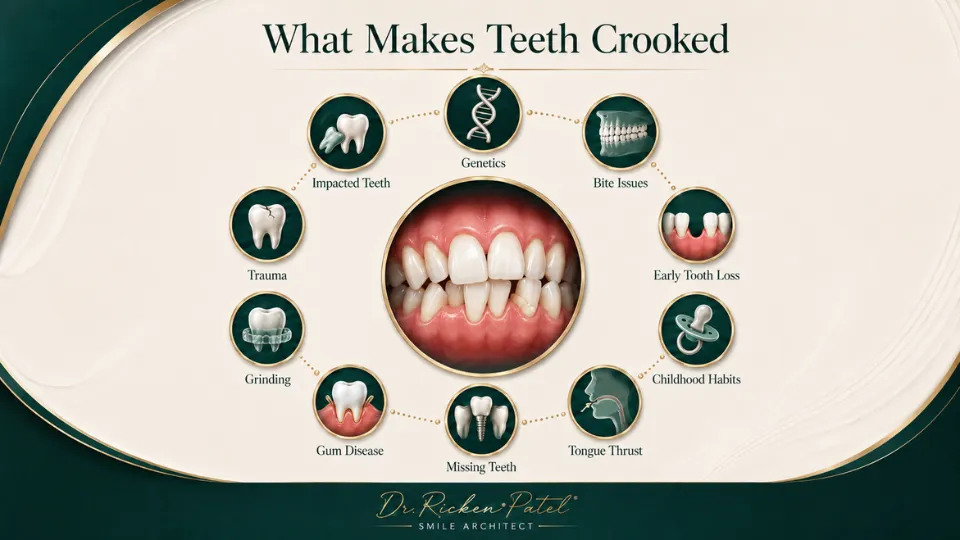
What Makes Teeth Crooked (10 Common Causes)
So, what makes teeth crooked? The answer is not always one single cause. Crooked teeth often develop because several factors work together over time.
1. Genetics and Jaw Size
Genetics can affect jaw size, tooth size, and spacing, causing teeth to crowd, overlap, or rotate.
2. Upper and Lower Teeth Not Aligned
When the upper and lower teeth do not align properly, the bite can place uneven pressure on certain teeth. Over time, this may cause shifting, wear, chips, or chewing discomfort.
3. Early Loss of Baby Teeth
If a baby tooth is lost too early, nearby teeth may shift into the space, leaving less room for the adult tooth to come in properly.
4. Childhood Habits
Habits like thumb sucking, pacifier use, tongue thrusting, and mouth breathing can affect jaw growth and lead to crowding or bite problems.
5. Tongue Thrusting and Mouth Breathing
Tongue thrusting can push the front teeth forward over time and may contribute to an open bite.
6. Tooth Loss in Adults
When a tooth is missing, nearby teeth may drift into the space, causing adult teeth to shift or become crooked over time.
7. Gum Disease and Bone Loss
Healthy gums and bone help hold teeth in position. Gum disease can weaken the tissues and bone that support the teeth.
8. Teeth Grinding and Bite Pressure
Clenching or grinding can put heavy pressure on the teeth and bite.
9. Dental Trauma or Injury
A blow to the mouth, a sports injury, a fall, or an accident can move a tooth out of position.
10. Impacted Teeth or Wisdom Teeth
Some teeth do not erupt properly. An impacted tooth may remain partly or fully trapped under the gum or bone.
Read Also: What Is a Malocclusion
Signs and Symptoms of Crooked Teeth
Crooked teeth may cause visible, functional, and oral health signs, such as:
- Overlapping, twisted, or crowded teeth
- Gaps
- Upper and lower teeth not meeting properly
- Difficulty biting
- Chewing more on one side
- Food is getting trapped
- Trouble flossing
- Uneven tooth wear
- Jaw soreness
- Cheek biting or tongue biting
- Speech changes
- Gum irritation
A cosmetic dentist can look beyond the visible crowding and check whether crooked teeth are also affecting your bite, enamel, gums, or long-term smile health.
Problems Caused by Crooked Teeth
When teeth are crowded, uneven, or not meeting properly, they may lead to problems such as:
- Harder cleaning: Overlapping teeth can trap food and plaque, making brushing and flossing more difficult.
- Gum irritation: Crowded teeth can trap plaque, increasing the risk of inflammation or gum disease.
- Uneven tooth wear: Poor bite alignment can place extra pressure on certain teeth, leading to worn enamel, chips, cracks, or sensitivity.
- Chewing discomfort: When the bite is not balanced, chewing may feel uncomfortable or uneven.
- Jaw strain: Misaligned teeth may contribute to jaw soreness, facial tension, clicking, or headaches.
- Speech changes: Tooth position can affect tongue movement.
- Smile confidence: Crooked front teeth can make some patients feel less comfortable smiling or speaking.
Diagnosis and Evaluation for Crooked Teeth
A dental evaluation helps identify why the teeth are crooked and whether the issue is cosmetic, functional, or both. The dentist check:
- Tooth position: Crowding, gaps, rotations, or shifting of teeth.
- Bite alignment: How the upper and lower teeth meet.
- Tooth wear: Chips, worn edges, or signs of grinding.
- Gum health: Recession, inflammation, or bone support.
- Jaw comfort: Soreness, clicking, or bite pressure.
- Smile balance: Tooth shape, symmetry, and facial harmony.
Digital scans, X-rays, photos, and bite analysis may also be used for more accurate planning. At Dr. Ricken Patel’s practice, smile simulation can help patients preview possible cosmetic changes before treatment.
Treatment Options for Crooked Teeth
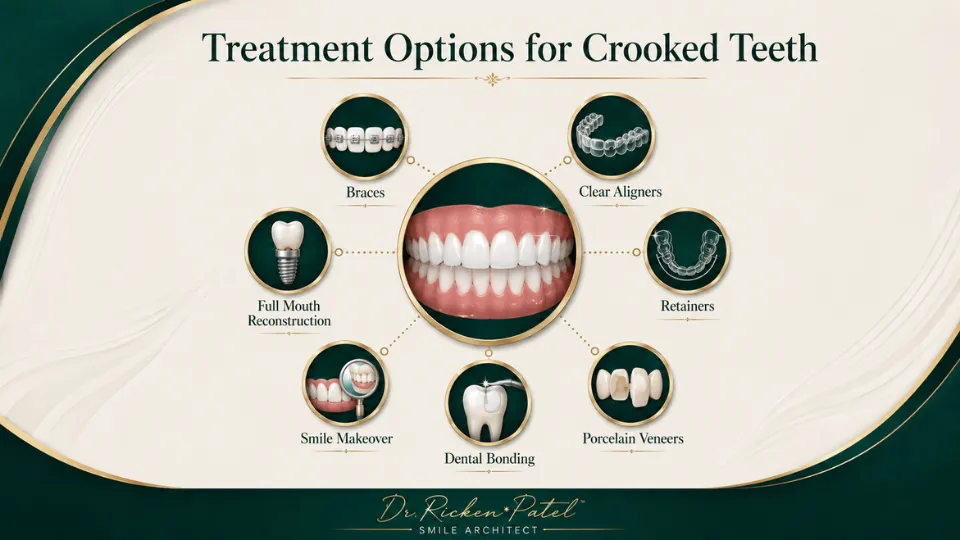
Treatment for crooked teeth depends on the alignment, your bite, and your goals. Some cases can be improved with cosmetic dental services.
- Braces: For complex crowding, rotated teeth, or bite problems.
- Clear aligners: For mild to moderate crooked teeth, gaps, crowding, or bite concerns.
- Retainers: To help keep teeth from shifting after treatment.
- Porcelain veneers: For mild cosmetic crookedness, uneven edges, small gaps, or tooth shape concerns.
- Dental bonding: For small chips, minor gaps, or slight unevenness.
- Smile makeover: A personalized plan that may combine cosmetic dentistry services such as veneers, bonding, whitening, or gum contouring.
- Full mouth reconstruction: For more advanced cases involving worn teeth, missing teeth, bite problems, or damaged restorations.
Which Treatment Option Is Right for You?
Fixing crooked teeth starts with understanding your smile, your bite, and the result you want to see. Dr. Ricken Patel, a Rutgers-trained cosmetic dentist and Smile Architect, takes a personalized approach to help create a smile that looks natural, balanced, and confident, not forced or overdone.
Looking to Improve Your Smile but Not Sure Where to Start?
Dr. Ricken Patel provides personalized smile consultations to help you choose the most suitable treatment for your teeth, bite, and smile goals
Trusted by 15,000+ Satisfied Patients
Conclusion
So, What Makes Teeth Crooked? Crooked teeth usually result from more than one factor, such as genetics, childhood habits, bite changes, or natural shifting over time. Mild misalignment may only affect appearance, but crowding or an uneven bite can make chewing, cleaning, and daily comfort more difficult. Understanding what causes teeth to become crooked is the first step toward choosing the right solution for a healthier, more confident smile.
FAQs About What Makes Teeth Crooked
1. Why Do Teeth Get Crooked Over Time?
Teeth may become crooked over time due to tooth loss, gum disease, bone loss, teeth grinding, retainer relapse, bite pressure, or natural tooth movement.
2. What Causes Crooked Teeth in Children?
Caused by genetics, jaw growth patterns, early loss of baby teeth, prolonged thumb sucking, pacifier use, tongue thrusting, mouth breathing, or impacted teeth.
3. Can Upper Teeth and Lower Teeth Not Aligned Cause Problems?
Yes. When the upper teeth and lower teeth are not aligned, the bite may place uneven pressure on the teeth and jaw.
4. Can Crooked Teeth Be Fixed Without Braces?
Sometimes. Mild cosmetic crookedness may be improved with bonding or porcelain veneers, but these treatments do not move the teeth. If the teeth or bite need realignment, braces or clear aligners may be needed.
5. Can Crooked Teeth Cause Gum Disease?
Crooked teeth can make cleaning harder, which may increase plaque buildup around the gums.
6. When Should I See a Cosmetic Dentist for Crooked Teeth?
You should see a cosmetic dentist if crooked teeth affect your smile confidence, front-tooth appearance, bite comfort, chewing, or oral health.