
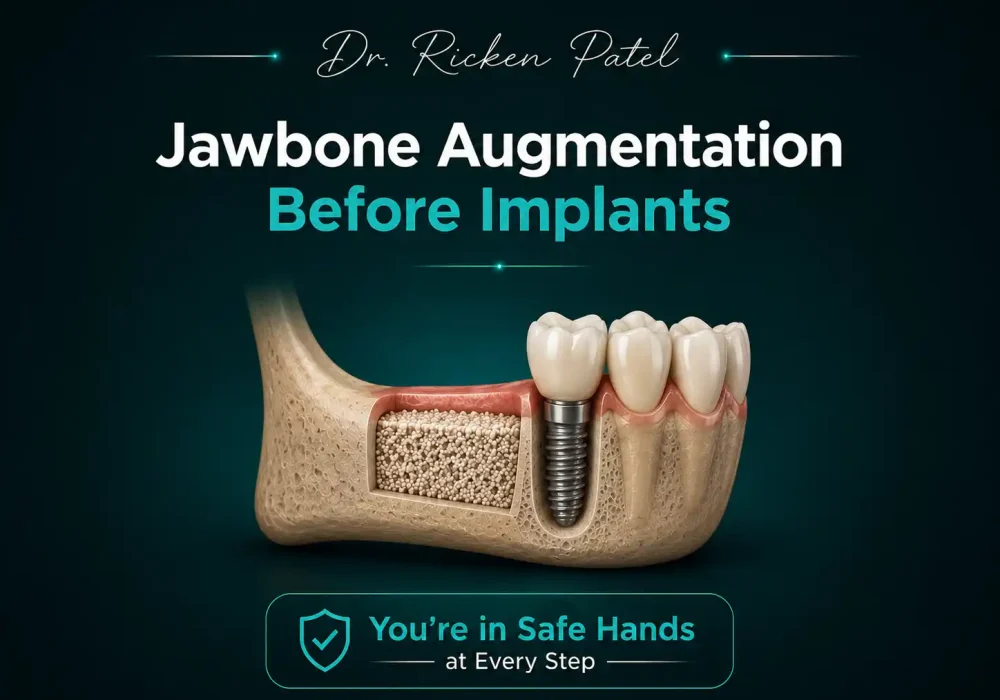
Not every smile transformation starts with the implant itself. For many patients, jawbone augmentation before implants is the essential first step that determines whether treatment succeeds or fails.
After tooth loss, the jawbone begins to resorb because it no longer receives the natural stress provided by tooth roots and without enough bone volume.
If you’ve been told you need bone augmentation, here’s what that means, why it matters, and what to expect.
What Is Jawbone Augmentation?
Jawbone augmentation refers to surgical procedures designed to restore lost bone mass in the jaw. It is sometimes called ridge augmentation or bone grafting, and it is performed when the existing jawbone lacks the height, width, or density needed to securely hold a dental implant.
A dental bone graft adds bone or bone-substitute material to the jaw, acting as a scaffold that your own bone cells gradually replace with native bone over several months.
Benefits of Jawbone Augmentation Before Implants
Choosing to rebuild the bone before placing an implant isn’t just a precaution, it’s an investment in long-term results.
Here’re the main 3 Benefits of Jawbone Augmentation Before Implants:
- Better aesthetics: Adequate bone volume supports the gum line and prevents the sunken appearance that often follows tooth loss.
- Longer-lasting outcomes: Published clinical research consistently reports success rates above 90% for routine bone grafting, with implants placed into augmented bone showing survival rates comparable to those placed in native bone.
- Reduced risk of early failure: Placing an implant into thin or shallow bone risks exposed threads, poor aesthetics, and early loss.
Why Ridge Augmentation Is Essential for Successful Dental Implants
Bone augmentation for dental implants success isn’t optional when the bone is deficient, it is the difference between a procedure set up to last and one engineered around compromise.
Bone Loss Begins Soon After Tooth Loss
When a tooth is lost, the bone that once supported it begins to resorb almost immediately. A significant proportion of bony ridge width can be lost within the first 12 months.
Why Bone Quality Matters for Implants
After an implant is placed, the jawbone is supposed to fuse with it a process called osseointegration. If the jawbone is damaged or insufficient, this cannot occur properly.
How Ridge Augmentation Restores the Foundation
Ridge augmentation rebuilds the missing bone, creating the stable foundation needed before an implant is placed. This improves implant support and helps promote long-term success.
Who Needs Jawbone Augmentation Before Implants?
Bone grafting is often recommended for patients who have been missing a tooth for over 12 months, experienced bone loss due to periodontal disease and sustained jaw trauma.
Common Candidates Include Patients Who:
- Have experienced long-standing tooth loss with progressive bone shrinkage.
- Have suffered bone damage from advanced gum disease.
- Have had a previous implant fail, leaving a compromised bone behind.
- Require implants in the upper back jaw, where the sinus floor sits close to available bone.
- Have congenitally absent teeth where the ridge never fully developed.
A 3D CBCT scan is the only reliable way to assess whether augmentation is needed before proceeding with implant planning, also choosing the right cosmetic dentist is key to achieving predictable, long-lasting implant results.
Types of Jawbone Augmentation Procedures
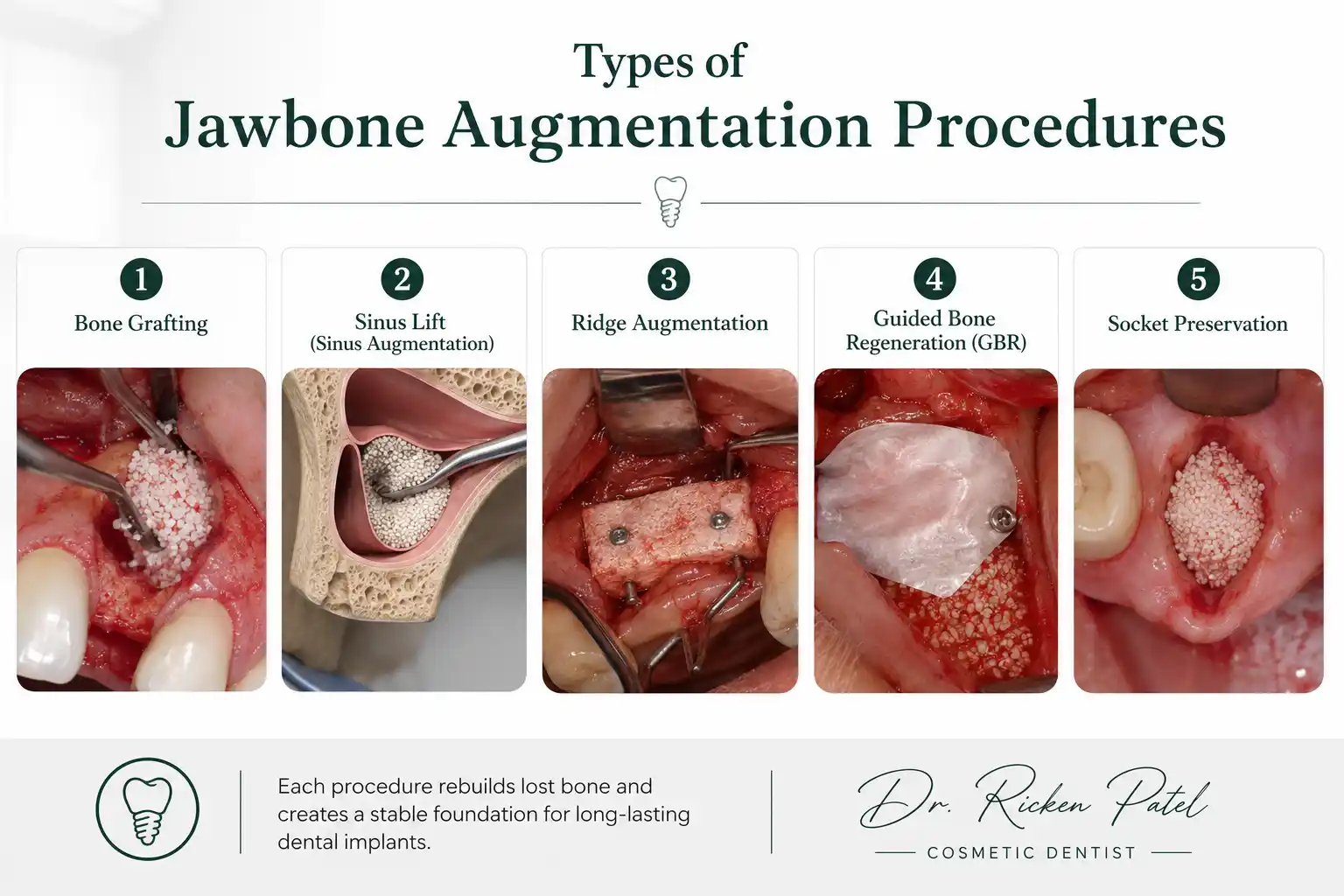
1. Bone Grafting
Bone grafting is the most common type of jawbone augmentation, as it involves adding natural or synthetic bone material to areas where bone has been lost, helping rebuild a strong foundation for future dental implants.
2. Sinus Lift (Sinus Augmentation)
A sinus lift is recommended when the upper jaw doesn’t have enough bone to securely support a dental implant. During the procedure, the sinus membrane is gently lifted, and bone graft material is placed underneath to increase bone height.
3. Ridge Augmentation
Ridge augmentation helps rebuild the shape and width of the jawbone after bone loss caused by missing teeth, injury, or gum disease, which creates a stronger, more stable base for dental implants.
4. Guided Bone Regeneration (GBR)
Guided bone regeneration is a technique that uses a special membrane to protect the area while new bone grows, which allows the bone to heal properly without interference from surrounding soft tissue.
5. Socket Preservation
Socket preservation is performed immediately after a tooth is removed to help maintain the jawbone. By placing bone graft material into the empty socket, it reduces bone loss and prepares the area for a future dental implant.
How Is Jawbone Augmentation Performed?
Most dental bone grafts are performed under local anaesthesia, often supplemented with sedation, in a single appointment lasting between 45 and 90 minutes depending on graft size and complexity.
The general sequence:
- 3D imaging and planning: precise mapping of bone volume and anatomy before surgery begins.
- Anaesthesia: local anaesthesia, with sedation available for anxious patients.
- Graft placement: material is positioned at the defect site, usually covered with a resorbable membrane to guide bone regeneration.
- Closure: sutures are placed to allow undisturbed healing over the graft.
Depending on the approach, the procedure is performed either at the dentist’s office or, for larger grafts involving the iliac crest, at a specialized clinic.
Recovery After Jawbone Augmentation
Bone graft healing before implant placement typically takes between four and nine months, depending on graft type, defect size, and whether the implant is placed simultaneously or in a staged approach.
Post-operative care is straightforward:
- It takes about ten days for the gums to heal after the procedure, and healing can be supported by applying an ice pack .
- Avoid alcohol, smoking, and physical exertion in the first few days.
- Maintain thorough oral hygiene while avoiding the treated area directly.
- Most patients return to normal daily activities within 24 to 72 hours after surgery.
Once healing is complete, your dentist can determine whether you are ready for a single implant, multiple implants, or a full-arch solution such as All-on-4 dental implants or All-on-6 dental implants.
Risks and Success Rate of Jawbone Augmentation
Potential complications can include postoperative bleeding, hematomas, infections, or temporary sensitivity.
Complications, when they occur, are usually minor and self-limiting. Sinus membrane perforation during sinus lifts can occur but is usually repaired during the same surgery without affecting the outcome.
Specialist planning with 3D imaging and careful surgical technique is what drives those high success figures, and it’s the standard applied at every stage of treatment here.
Why Choose Dr. Ricken Patel for Jawbone Augmentation and Dental Implants?
Dr. Ricken Patel takes the time to understand your needs and create a treatment plan that’s right for you. Using advanced 3D imaging, he carefully evaluates your jawbone to see if bone augmentation is needed before placing a dental implant.
Based on your oral health, bone condition, and long-term goals, Dr. Patel creates a customized treatment plan designed to restore bone, support implant success, and achieve lasting, natural-looking results.
Explore Our Complete Range Of Cosmetic Dental Services
Conclusion
A strong, stable smile starts with a solid foundation. Jawbone augmentation before implants is a well-proven procedure that restores the bone volume your jaw needs to support implants for years to come. Book a consultation with Dr. Ricken Patel and take the first step toward a smile built to last.
FAQs About Jawbone Augmentation Before Implants
1. Is Jawbone Augmentation Painful?
Most patients describe the post-operative discomfort as comparable to a tooth extraction, manageable with over-the-counter pain relief for the first few days.
2. How Long Does it Take To Heal Before Getting Implants?
Healing typically takes between four and nine months depending on graft type and defect size. Smaller socket preservation grafts often integrate faster than larger lateral ridge augmentations.
3. Can I Get An Implant and a Bone Graft At The Same Time?
In selected cases, yes. Whether bone grafting and implant placement can be performed at the same time depends on the extent and location of the bone deficiency.
4. Will My Body Reject The Bone Graft?
Modern graft materials are extensively processed to eliminate rejection risk. The body integrates the graft as it gradually lays down new bone over several months in a process called osseoconduction.
5. What Happens if I Don’t Get Bone Augmentation When I Need It?
Placing an implant into insufficient bone risks early failure, exposed implant threads, and poor aesthetics around the gum margin. Augmentation ensures the implant has the stable, healthy foundation it needs to last.