
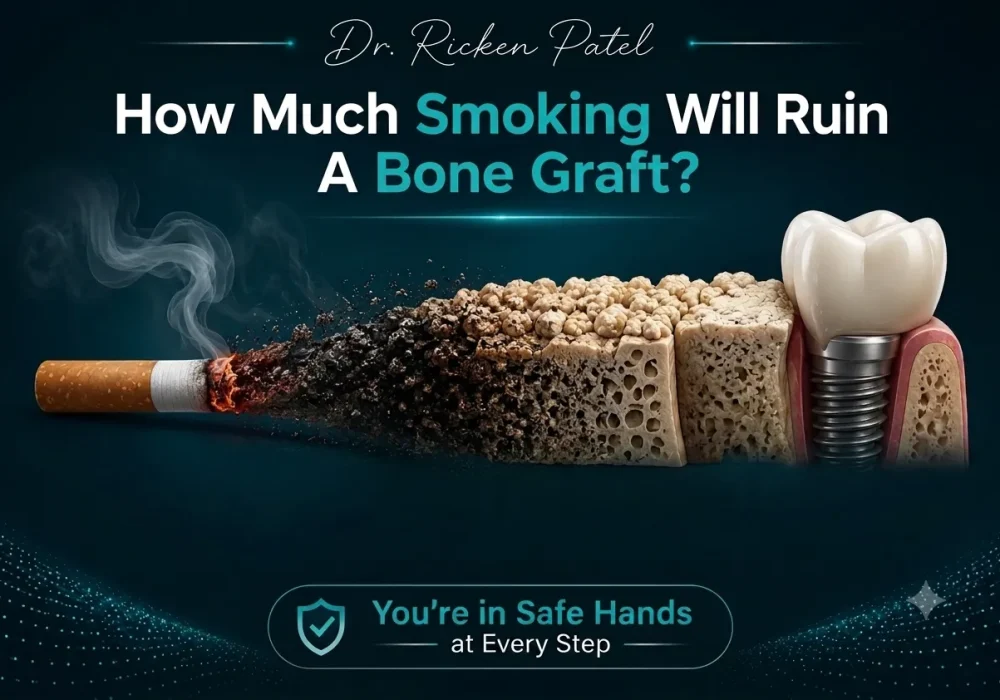
Smoking is one of the most common habits and one of the biggest threats to a successful bone graft. If you smoke and you’ve been told you need one before dental implants, you’re probably asking: how much smoking will ruin a bone graft? The honest answer is that even light smoking after bone grafting in the mouth raises your risk of failure.
This guide breaks down exactly what smoking does, how much is too much, and what you can realistically do about it.
What Is a Dental Bone Graft?
A dental bone graft is a procedure that rebuilds lost jawbone so a dental implant has a stable, solid foundation to fuse with. Think of the bone graft like a freshly planted seed, it needs the right environment, including oxygen and stability, to grow.
Without sufficient bone volume, an implant cannot integrate properly and is likely to fail. Bone grafting solves this problem, but only when healing goes as it should.
Why Is Smoking Harmful After a Bone Graft?
Smoking attacks the healing process at every stage. Nicotine restricts blood flow by shrinking blood vessels, which means the graft site struggles to receive the oxygen and nutrients it needs to integrate.
The Damage Doesn’t Stop There:
- Nicotine suppresses osteoblast activity, the cells responsible for building new bone directly slowing bone formation at the graft site.
- Smoking weakens the immune response, making infections after oral surgery significantly more likely.
- Non-smokers typically heal from bone grafts in three to six months; smokers may take considerably longer, delaying implant placement.
How Much Smoking Will Ruin a Bone Graft?
You’re probably asking: how much smoking will ruin a bone graft? There is no safe amount of smoking after bone graft in the mouth. Even light smoking increases the risk of complications, but heavy smokers a pack or more per day are at the highest risk of graft failure. A review of 33 medical trials found that smokers are twice as likely to experience implant loss due to failed graft integration.
The key takeaway: it’s not about reaching a threshold before the graft fails. Every cigarette you smoke reduces blood flow to the surgical site, slows bone formation, and gives bacteria a better environment to grow.
Can One Cigarette Ruin a Bone Graft?
Technically, a single cigarette in isolation is unlikely to cause total failure. But it’s not as harmless as it sounds. Smoking after bone graft in mouth even once introduces harmful chemicals to a healing surgical site, disrupts blood circulation, and creates suction that can dislodge the graft or trigger a painful dry socket.
The problem is that one cigarette rarely stays one cigarette. Every time you smoke during the healing window, you chip away at the graft’s ability to fuse. The risk compounds quickly.
What Happens If You Smoke After a Bone Graft?
Smoking after a bone graft can destroy graft material, force patients to undergo repeat procedures, compromise dental implant placement, and in serious cases lead to infection that spreads beyond the mouth.
In Practical Terms, You Could Be Looking At:
- Graft failure requires a second procedure.
- Extended healing time pushing implant placement back by months.
- Higher infection risk and slower immune response.
- Poor bone integration that makes a stable implant impossible.
None of these outcomes are inevitable, but they become far more likely the more you smoke during recovery. Choosing the right cosmetic dentist is one of the most important steps toward a healthy, confident smile.
How Smoking Slows Bone Graft Healing
Nicotine is known to suppress osteoblast activity, meaning bone takes longer to grow and integrate, the risk of infection increases and there is a higher chance of needing repeat surgeries.
On top of that, research shows nicotine reduces blood circulation by up to 40%, directly impacting how quickly and effectively the graft integrates with natural bone. Less circulation means less oxygen, fewer healing cells reaching the site, and a graft that simply cannot perform the way it needs to.
How Long Should You Avoid Smoking After a Bone Graft?
After Understanding how much smoking will ruin a bone graft, At minimum, avoid smoking for at least two weeks after a bone graft for initial healing, and for three to six months after implant placement for full bone integration.
If quitting entirely isn’t possible right now, reducing intake significantly, especially in the first two months gives the graft its best shot. Even cutting from a pack a day to two or three cigarettes can make a measurable difference.
Never smoke immediately after a tooth extraction or bone graft, as doing so dramatically increases the risk of dry socket, a painful condition that exposes the bone and delays healing.
Can Smokers Still Get Dental Implants?
Yes, with the right planning and support. There is a significant correlation across 25 out of 33 studies between smoking and increased implant failure rates, but smokers who reduce intake and follow post-surgical care guidelines can still achieve successful outcomes.
If you smoke, the approach is to be honest with your dentist, reduce smoking before and after surgery, follow all aftercare instructions carefully, and attend every follow-up appointment. Many patients who smoke have successfully received bone grafts and implants by treating the healing period as a serious commitment.
Why Choose Dr. Ricken Patel for Bone Grafting and Dental Implants?
Dr. Ricken Patel combines advanced training with a personalized approach to help every patient achieve long-lasting results.
- Rutgers-trained cosmetic dentist with advanced implant certifications.
- Comprehensive evaluations using 3D imaging for precise treatment planning.
- Personalized care based on your bone health, oral condition, and lifestyle.
- Expertise in all on 4 dental implants and all on 6 dental implants.
- Bone grafting solutions to support successful implant placement when needed.
- Patient-first approach focused on comfort, transparency, and long-term outcomes.
- Full range of cosmetic dental services tailored to your unique smile goals.
Conclusion
Understanding how much smoking will ruin a bone graft is the first step toward making smarter choices during your recovery. The less you smoke, the better your graft integrates, and the closer you get to the stable, lasting smile you’re working toward. Ready to take the next step? Book a consultation with Dr. Ricken Patel today.
FAQs About Smoking After a Bone Graft
1. Can I Smoke One Cigarette After a Bone Graft?
It’s strongly advised against. Even one cigarette introduces toxins that restrict blood flow and can disrupt the graft site. The suction from inhaling alone risks dislodging the graft or causing a dry socket.
2. What Happens if I Accidentally Smoke After Bone Graft Surgery?
Don’t panic, one accidental exposure is unlikely to cause immediate failure. But contact your dentist, monitor for signs of infection or dry socket, and stop smoking for the remainder of your healing period.
3. Can Vaping Affect a Dental Bone Graft?
Yes. E-cigarettes still contain nicotine, which impairs bone healing. While vaping reduces exposure to tar and other chemicals found in cigarettes, the nicotine alone is enough to slow blood flow and interfere with bone integration.
4. When Is It Safe To Smoke After a Bone Graft?
At minimum, avoid smoking for two weeks after grafting and for three to six months after implant placement. The longer you wait, the better your outcome.
5. Will My Bone Graft Fail If I Smoke?
It depends on how much and how soon. Heavy smokers face more than twice the failure rate of non-smokers, but patients who significantly reduce intake and follow post-op care guidelines can still achieve successful results.