
One day, your teeth look normal. The next time you catch your reflection and one tooth or your whole smile looks noticeably darker than it did a week ago. That’s not in your head, and it’s not always “just coffee.” Sudden discoloration of teeth can come from something as minor as a new habit or as significant as a dying nerve inside the tooth, and the only way to tell the difference is to understand what’s actually happening beneath the enamel.
What Is Sudden Discoloration of Teeth?
Sudden discoloration of teeth refers to a visible color change that develops over days to a few weeks, rather than the slow yellowing most people expect with age. Dentists generally classify tooth staining as either extrinsic (on the outer enamel surface) or intrinsic (originating inside the dentin or pulp). Sudden, rapid color shifts are far more often intrinsic, meaning the cause lives inside the tooth, not on its surface.
Signs Of Sudden Discoloration Of Teeth?
Not every color change carries the same urgency. The pattern of sudden discoloration of teeth tells you a lot about what’s going on:
- One tooth is turning gray, brown, or black while neighboring teeth stay normal. A classic sign of internal bleeding or nerve death after an impact.
- Darkening accompanied by pain, swelling, or a bad taste suggests infection.
- A tooth that recently had a root canal is gradually shifting to a dull gray.
- Whole-mouth dulling after starting a new medication is common with certain antibiotics, antihistamines, or blood pressure drugs.
- Patchy white or brown spots that suddenly seem obvious, often noticed only after a newly erupted permanent tooth comes in.
If a single tooth has darkened and there’s any pain, swelling, or sensitivity to temperature, that combination should move you to the front
of the line for an appointment rather than the back.
What Are The Causes Of Sudden Discoloration Of Teeth?
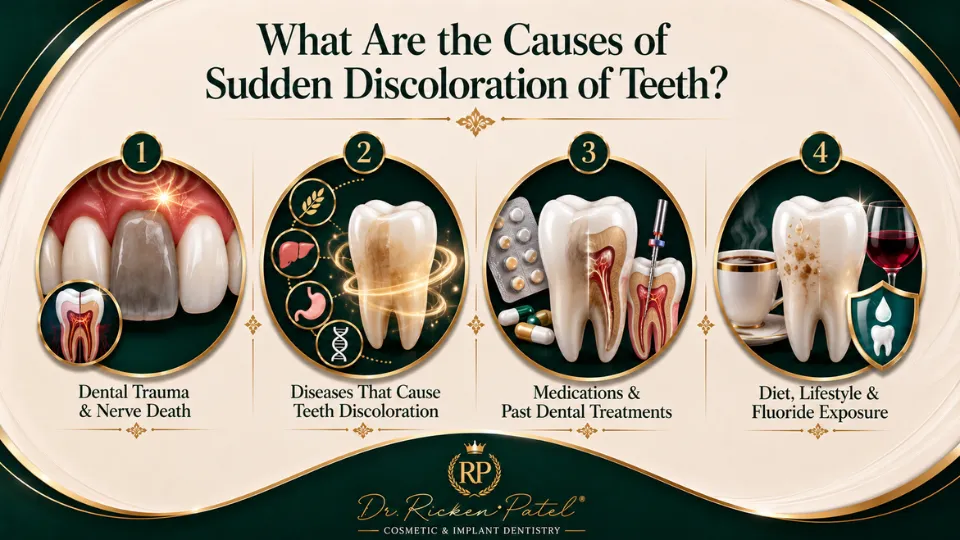
Sudden discoloration of teeth almost always traces back to one of four categories:
1- Dental Trauma And Nerve Death
Physical trauma is the leading cause of a single tooth suddenly turning gray or black. When an impact damages internal blood vessels, blood byproducts painlessly leak into the dentinal tubules over days or weeks.
According to PubMed-indexed research, traumatic dental injuries affect millions of people worldwide and can damage the tooth pulp, leading to progressive gray or brown tooth discoloration.
2- Diseases That Cause Teeth Discoloration
Certain systemic diseases cause intrinsic discoloration through highly specific biological mechanisms, rather than general illness:
- Celiac Disease: The ADA reports that up to 50% of children with celiac disease develop enamel defects that permanently alter tooth color and texture.
- Liver & Biliary Disorders: Conditions causing elevated bilirubin in infants (such as biliary atresia) can permanently trap pigment inside developing primary teeth, resulting in a green or yellow tint.
- Eating Disorders: Frequent vomiting consistently exposes teeth to strong stomach acids.
- Genetic Conditions: Inherited disorders like dentinogenesis imperfecta and amelogenesis imperfecta alter the structural foundation and color of the entire dentition from the inside out.
3- Medications And Past Dental Treatments
Certain prescription medications and dental procedures can permanently alter tooth color from the inside out:
- Tetracycline Antibiotics: The FDA warns that using these during tooth development (pregnancy through age 8) can cause permanent yellow, brown, or gray stains that worsen with sun exposure.
- Other Prescriptions: Certain antihistamines, antipsychotics, and blood pressure medications carry milder discoloration side effects.
- Root Canals: Residual nerve tissue left inside a treated tooth can slowly turn it dark months or years after the procedure.
4- Diet, Lifestyle, And Fluoride Exposure.
- Dietary Stains: Chromogens in coffee, tea, red wine, and dark sauces can bind to enamel, causing visible stains within weeks.
- Fluorosis: Excess fluoride intake during childhood causes spots that seem to appear suddenly once adult teeth erupt. 65% of US adolescents (ages 12-15) have fluorosis, with nearly a third of these cases being moderate-to-severe.
What Are The Treatments For Sudden Discoloration Of Teeth?
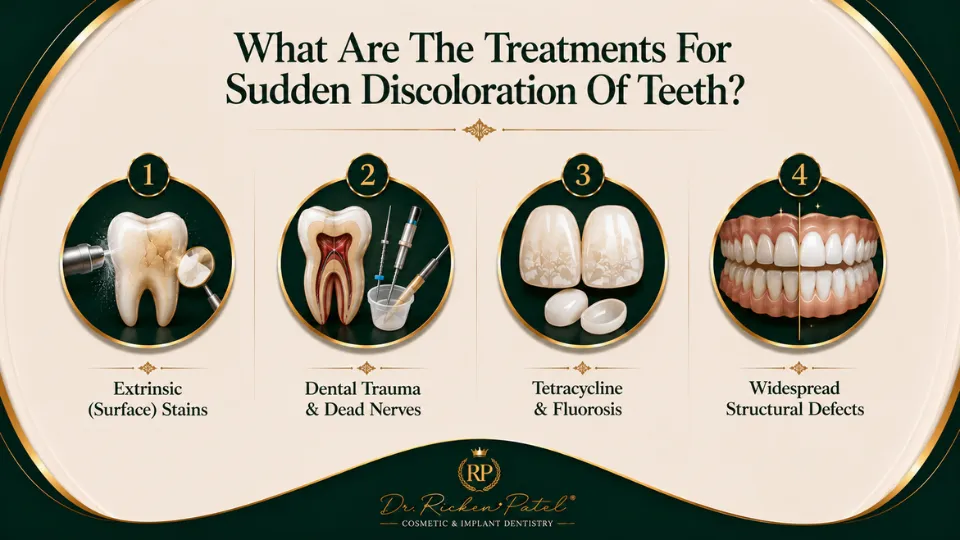
Selecting the right cosmetic dental services depends entirely on targeting the exact root cause: extrinsic stains, intrinsic damage, or an infected tooth.
1- Extrinsic (Surface) Stains
Discoloration from diet or tobacco typically responds well to a professional dental cleaning paired with in-office or custom take-home whitening treatments.
2- Dental Trauma & Dead Nerves
A single darkened tooth requires a specialized, inside-out approach:
- Root Canal Therapy: The essential first step to clear out dead tissue or hidden infection.
- Internal Bleaching: A whitening agent is sealed directly inside the tooth. Clinical studies show a 90%+ immediate success rate, though minor touch-ups may be needed over the years.
- Veneers: If bleaching doesn’t fully resolve the color, minimal-prep porcelain or 3D-printed veneers can perfectly mask the dark shade without the need for an aggressive full crown.
3- Tetracycline & Fluorosis
Because these pigments sit deep within the dentin, not on the enamel, they strongly resist standard whitening. Cosmetic bonding or porcelain veneers are the most reliable, long-lasting fixes here.
4- Widespread Structural Defects
For widespread issues like amelogenesis imperfecta or extensive trauma, treating one tooth at a time fails. Instead, these require a coordinated approach:
- Full Mouth Reconstruction: Restores the health, function, and structure of the entire mouth.
- Smile Makeover: Combines cosmetic treatments (whitening, bonding, veneers) to transform your smile.
How to Prevent Sudden Discoloration Of Teeth?
Because trauma is the leading cause of a single dark tooth, prevention starts with impact protection and early detection:
- Wear a Mouthguard: Essential for sports. Even a minor, painless impact can silently damage the nerve, causing the tooth to darken weeks later.
- Get Post-Injury X-Rays: See a dentist after any mouth injury.
- Screen Medications: Review new prescriptions with your dentist, especially tetracycline antibiotics during pregnancy or for children under age 8.
- Address GI Issues Early: Early diagnosis and management of conditions like celiac disease can prevent permanent enamel defects.
- Regulate Pediatric Fluoride: Monitor your child’s toothpaste use and supplements to prevent fluorosis during tooth development.
- Maintain Routine Cleanings: Professional dental cleanings remove plaque and stain-causing chromogens before they permanently bind to the enamel.
What Is The Best Treatment For You?
There’s no single best treatment for sudden discoloration of teeth; finding the right plan with a cosmetic dentist depends on answering a few honest questions:
- Is it one tooth or all of them?
- Did it follow an injury, even an old one?
- Is there pain, swelling, or sensitivity?
- Has it been gradual over the years, or did you notice it in days?
Finding the right solution starts with a thorough clinical exam to check the tooth’s nerve health. Once the root cause is clear, Dr. Ricken uses advanced smile simulation to let you actually preview your final results before you commit to any treatment.
Ready to Restore Your Natural Tooth Color?
Discover personalized treatment options to eliminate discoloration, improve tooth appearance, and bring back a healthy, natural-looking smile.
Trusted by 15,000+ Satisfied Patients
Conclusion
Noticing the sudden discoloration of teeth can be alarming, but it is never a condition you have to live with. Whether the unexpected color change is tied to hidden nerve damage, a new medication, or deep structural defects, trying to guess the cause at home will only waste your time and money. By acting quickly to secure an exact clinical diagnosis, you can stop any underlying damage in its tracks and confidently choose a targeted treatment that restores both the health and aesthetics of your smile.
FAQ About Sudden Discoloration Of Teeth
1. Can a tooth turn dark overnight?
Not usually overnight, but it can happen within days to a couple of weeks after trauma, as blood and breakdown products from a damaged nerve seep into the dentin.
2. Is sudden discoloration of teeth always an emergency?
Not always, but if it’s limited to one tooth and paired with pain or swelling, treat it as urgent.
3. Will regular whitening fix sudden tooth discoloration?
It depends on the cause. Whitening works well on surface stains from food, drinks, or tobacco.
4. Can sudden discoloration of teeth go away on its own?
Stains from diet can fade somewhat with better hygiene, but discoloration from a dead nerve, infection, or medication is permanent without treatment and typically darkens over time, not lightens.
5. What does it mean if my tooth turns gray after an injury?
It usually means the nerve inside the tooth has been damaged or has died, even if the tooth doesn’t hurt.