
Treat gum disease without a scalpel
LANAP laser therapy for moderate to advanced gum disease, planned and delivered by a periodontist across three Central New Jersey offices.
Across 948 Google reviews at Brunswick Smiles
Planned and delivered by a periodontist
No cutting and no stitches
Most patients return to normal activity the day after
Your gums are treated by a periodontist

Dr. Rida Kazmi
Periodontist
Dr. Kazmi treats the full range of periodontal problems, from early inflammation through to advanced disease and implant work. She trained at New York University and is board eligible in periodontics. Her approach is to save what can be saved before anything gets taken out.
- Dental training at New York University
- Specialist training in periodontics
- Board eligible, American Board of Periodontology
- Treats gum disease, gum recession and dental implants
With the rest of the practice behind her
Gum disease rarely arrives on its own. If your case also needs restorative work, extractions or implants once the gums are stable, the oral surgeons and the restorative team are in the same building working from the same records.
LANAP or traditional gum surgery?
Both treat the same problem: bacteria and infected tissue below the gum line that brushing cannot reach. They differ in how they get there, and in what the following week looks like.
LANAP laser therapy
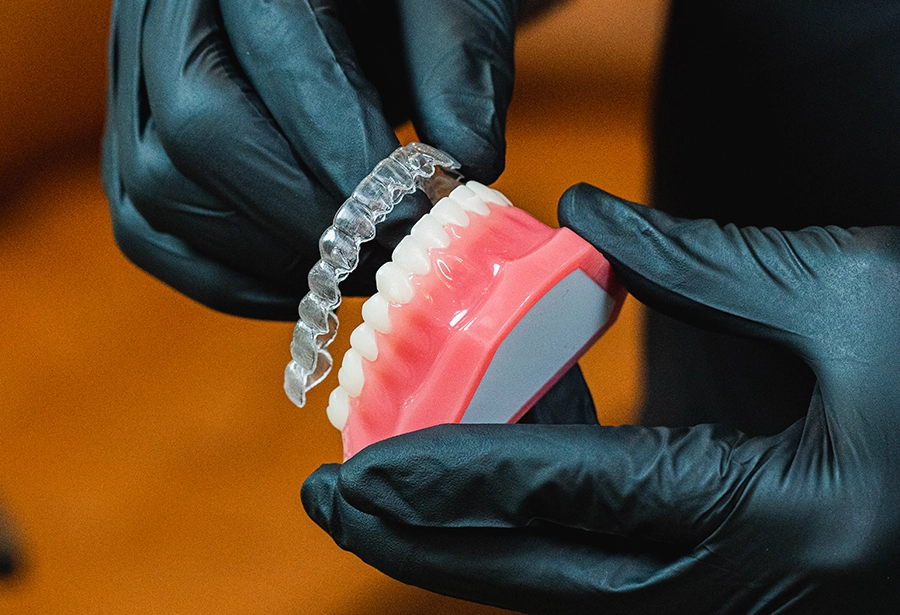
A thin laser fibre passes between the gum and the tooth to remove diseased tissue.
- No scalpel and no stitches
- The laser targets infected tissue and leaves healthy tissue alone
- Usually two appointments, treating one side of the mouth at a time
- Most patients are back to normal activity the next day
Traditional flap surgery
The gum is cut and lifted so the root surface can be cleaned directly.
- The gum is incised and then sutured back
- A long established and effective approach
- Recovery usually involves more swelling and more downtime
- Still the right call for certain bone defects
Signs it is time to have your gums looked at
- Gums that bleed when you brush or floss
- Gums that have pulled back from the teeth
- Persistent bad breath or a bad taste
- Teeth that feel loose or have started to shift
- Deep pockets picked up at a check up
- A previous diagnosis of periodontitis that was never fully treated
- A family history of gum disease and tooth loss
Why patients come here for laser gum treatment
- A periodontist plans and delivers the treatment, rather than a general dentist adding it on.
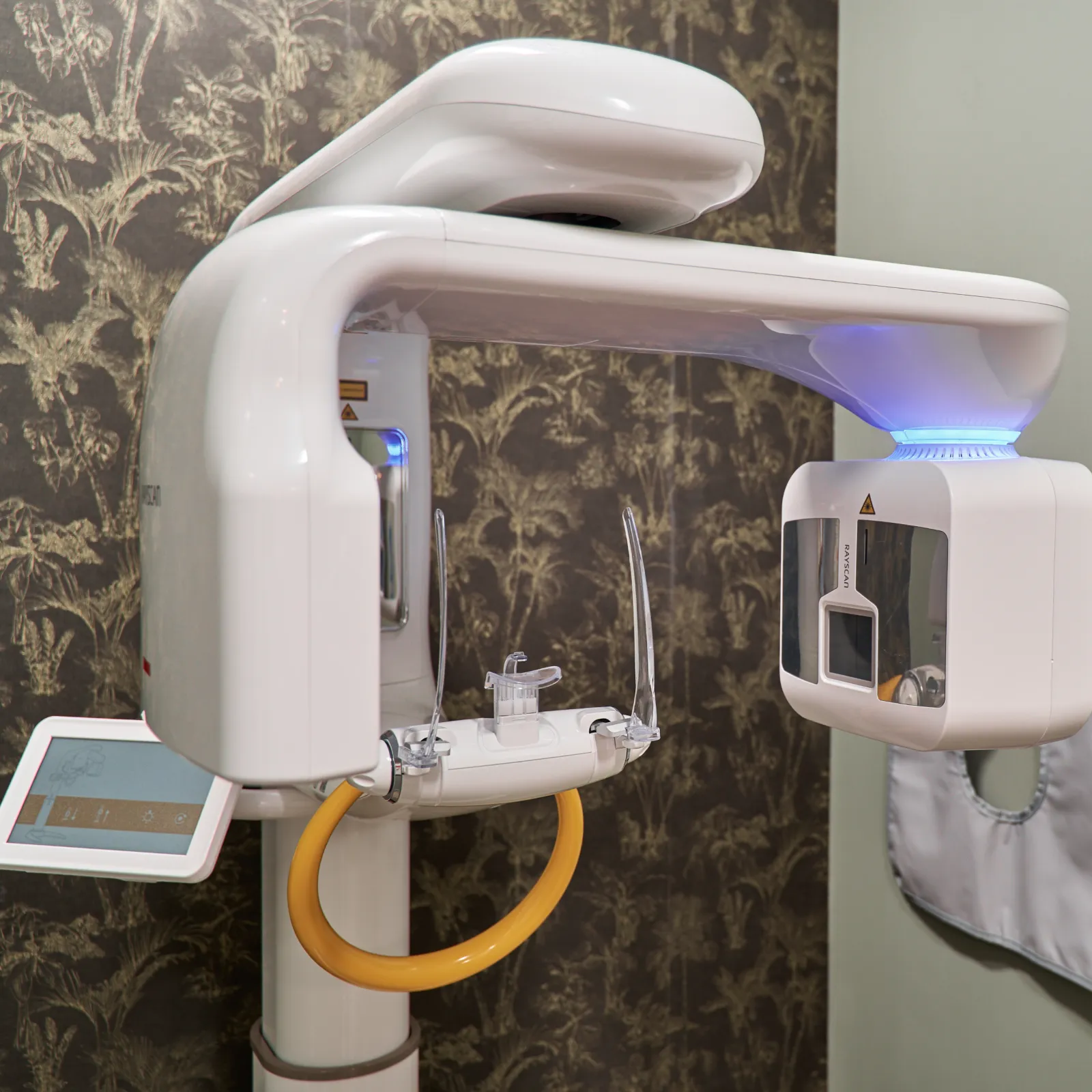
- Diagnosis starts with full pocket charting and imaging, so you see the actual measurements.
- If your case would be better served by traditional surgery, you will be told that.
- Restorative and implant work is handled in the same practice once the gums are stable.
- Three offices in Monmouth Junction, Robbinsville and Hillsborough.
What treatment looks like, step by step
Full periodontal assessment
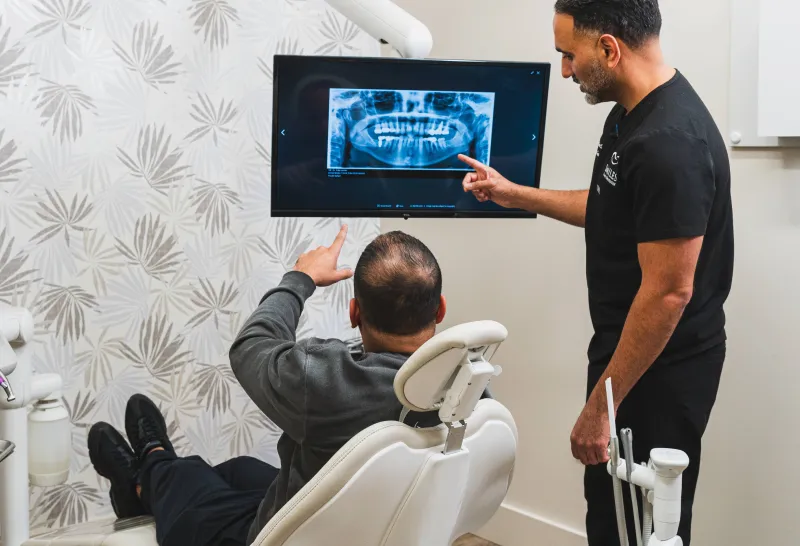
Pocket depths charted around every tooth, plus imaging to see the bone. You get the numbers, not a summary.
Your plan
We map which areas need treating and explain what the laser can and cannot achieve in your particular case.
First laser session
One side of the mouth is treated under local anaesthetic. No cutting and no stitches.
Second session
The other side, usually within a short window so the whole mouth settles together.
Maintenance
Gum disease is managed rather than cured. Regular reviews keep the pockets from reopening.
Questions patients ask before starting
Does it hurt?
The treatment is carried out under local anaesthetic, so you should not feel the laser. Most patients describe the days afterwards as sore rather than painful, and lighter than they expected from gum surgery.
How long is the recovery?
Most people return to normal activity the next day. You will be given specific guidance on eating and brushing for the first week.
Will it save my loose teeth?
Sometimes. It depends how much bone has already been lost. The assessment tells us what is realistic before you commit to anything.
Is laser treatment better than traditional surgery?
It is different rather than automatically better. It avoids cutting and suturing, which suits a lot of patients. Some bone defects are still better handled surgically, and we will say so.
How many appointments will I need?
Usually two treatment sessions, plus the assessment beforehand and reviews afterwards.
Does insurance cover it?
Many plans include periodontal benefits. We check your coverage and explain what is and is not covered before treatment starts.
Will my gums grow back?
Treatment stops the disease progressing and allows tissue to reattach. It does not regrow gum that has already receded. Grafting is a separate conversation.
What happens if I do nothing?
Untreated periodontitis keeps destroying the bone that holds your teeth in place. It is the leading cause of tooth loss in adults, and it is usually painless until it is advanced.
Book a periodontal assessment
Tell us where you are and what you have noticed. We will call you to arrange an assessment with Dr. Kazmi at the office that suits you.